Nausicaä of the Valley of the Wind: The 1984 Animage Furoku Postcard and the World Behind It

A Magazine Insert from the Year Nausicaä Was Born
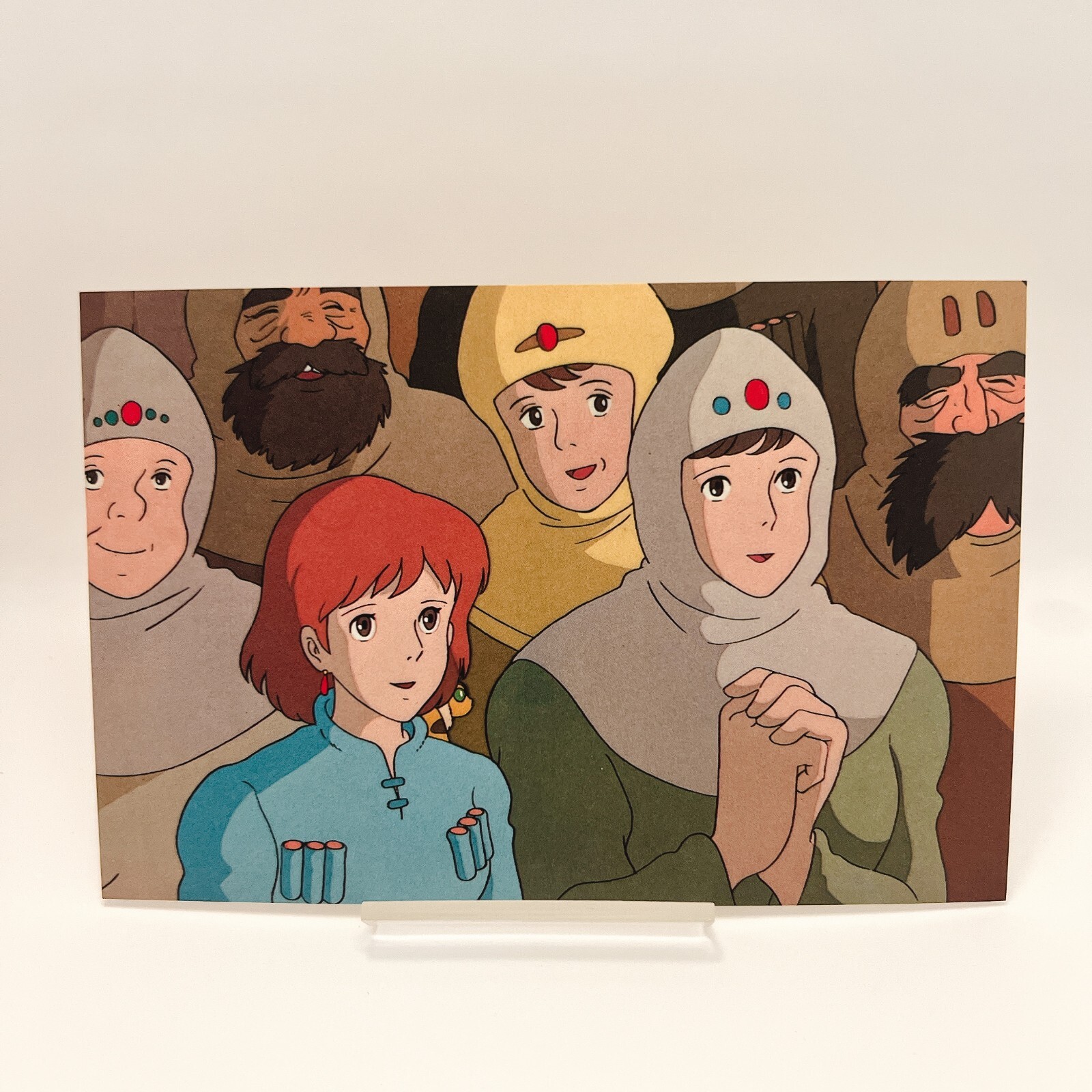
This postcard was not sold in a shop. It came tucked inside an issue of Animage, the influential monthly anime magazine published by Tokuma Shoten, as a furoku — a free insert bundled with the magazine for subscribers. Furoku are a long-standing tradition in Japanese print culture, particularly in anime, shojo, and educational magazines: postcards, pinup posters, stickers, stationery, and other small items enclosed as reader bonuses. Because furoku were designed as casual extras rather than standalone merchandise, surviving examples in good condition after more than four decades are comparatively uncommon.
This particular postcard was issued around the time of the theatrical release of Nausicaä of the Valley of the Wind on March 11, 1984 — a film directed and written by Hayao Miyazaki, produced by Topcraft, and distributed by Toei. Printed on card stock in full color in the style of the film’s cel animation artwork, it features Nausicaä herself alongside Asbel, the prince of Pejite — a key ally she encounters during the story — along with what appear to be other characters from the Valley. The “#6” in the listing title likely refers to a numbering within the set, though the total number of designs in the original series cannot be confirmed with certainty. As an Animage furoku, this item was produced in-house by Tokuma Shoten rather than through a third-party toy or merchandise manufacturer.
The Film, Its Franchise, and Its Place in Anime History
Nausicaä is set in a post-apocalyptic world overrun by the Fukai — a vast toxic forest spreading across the land — and follows its young protagonist, a princess of the Valley of the Wind, as she seeks a way for humans and the Fukai’s ecosystem to coexist. Miyazaki had been writing and drawing the original manga serialized in Animage since 1982, and the film was adapted from that still-ongoing story. The production of Nausicaä led directly to the founding of Studio Ghibli later in 1984, making it the creative and institutional origin point of one of the most celebrated animation studios in the world. For that reason, the film occupies a special category — sometimes called “pre-Ghibli” or the work that made Ghibli possible.
Outside Japan, the film had a complicated early history. A heavily edited English dub titled Warriors of the Wind circulated in North America from 1985, but the original version did not reach English-speaking audiences in an authorized form until Disney’s 2005 release. Since then, Nausicaä has been recognized globally alongside Miyazaki’s later Ghibli work, and the character remains one of the most beloved figures across both the manga and film fandoms in Europe, North America, and Asia.
Why Collectors Around the World Seek Out 1980s Japanese Anime Ephemera
Items like this postcard were produced exclusively for the Japanese domestic market. They were never distributed internationally, making them inaccessible to overseas fans at the time. The offset and gravure printing techniques used in the early 1980s — before digital production became standard — give period pieces a distinct color quality and texture that differs visibly from modern reprints. Within Japan, these items are grouped under the broader “Showa retro” collector category, reflecting enthusiasm for material culture from the Showa era (1926–1989). For international collectors, a furoku from Animage’s 1984 Nausicaä coverage represents a direct, tangible piece of the moment when Miyazaki’s world first reached audiences — and when the studio that would define Japanese animation was just getting started.

Price: $13.76 | View on eBay