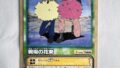
Plusle Katazun Fig 2 by Takara Tomy Arts

What the Katazun Series Is and Where It Comes From
Takara Tomy Arts — a subsidiary of Takara Tomy that specializes in capsule toys, prize figures, and amusement goods — produces several Pokemon-themed capsule toy lines for Japan’s vending machine networks. The Katazun Fig series is one of them: a lineup of small, hard-plastic figures depicting Pokemon in compact, rounded poses that suggest they are settled comfortably at rest. This piece comes from Vol. 2, which confirms the series ran across at least multiple installments.
The name “Katazun” appears to evoke a curled-up or tucked-in sitting posture — no official etymology has been confirmed, but the design philosophy is clear: these figures present Pokemon not in action poses or battle stances, but quietly contained, a deliberate aesthetic that sets the series apart from most Pokemon figure lines.
A brief note on the word “gashapon” in the listing title: internationally, it has become shorthand for any Japanese capsule toy, though it is strictly a registered trademark of Bandai. Takara Tomy Arts operates through a separate capsule toy distribution network — the listing uses the term in its widely understood overseas sense.
Plusle, the Cheering Pokemon from Hoenn
Plusle is National Pokedex No. 311, an Electric-type Pokemon introduced in Generation III — first appearing in Pokemon Ruby and Sapphire, released in Japan in 2002 for the Game Boy Advance. Its design follows the broad template Pikachu established: a yellow-and-cream body, large rounded ears, and expressive cheek markings. Plusle’s distinguishing feature is the red plus sign (+) that appears on its ears, cheeks, and lower body, giving it an immediate visual identity that remains clearly part of the same aesthetic family while standing on its own.
Its counterpart is Minun (No. 312), whose design mirrors Plusle’s with minus signs in place of plus marks — the two are typically discussed as a pair. In the games, Plusle is designated the “Cheering Pokemon,” a role built around encouragement and supporting teammates rather than straightforward combat strength.
The Katazun figure presents a notably quieter version of that character. Eyes closed, posture compact, Plusle here reads as resting rather than rallying — a contrast to its usual animated energy. That gap between the figure’s calm and the character’s in-game personality is part of what makes the Katazun design approach distinctive.
Why Japanese Capsule Toys Attract Collectors Worldwide
Capsule toy machines are part of everyday Japanese life, placed in supermarkets, toy shops, and train station concourses. A coin — typically somewhere between 100 and 500 yen — turns a handle and releases a capsule containing a random item from the current series. The format naturally drives completion behavior, and Pokemon’s deep roster and multi-generational fanbase make it one of the most consistently stocked franchises in the format.
Because these machines serve domestic Japanese distribution, the figures rarely reach international retail through official channels. For collectors abroad, that gap is itself part of the appeal. Plusle occupies an interesting niche within that interest: recognizable to anyone familiar with the Pokemon franchise, but specific enough to draw Generation III fans in particular, as well as those tracing the broader family of Pikachu-like Pokemon that has grown across each new generation of the series.


Boxed and cushioned for the trip from Japan
$15.17
Worldwide delivery from Japan • See the listing for condition and size