Umako Can Badge from Nangoku Shounen Papuwa-kun

The Series: Nangoku Shounen Papuwa-kun
Nangoku Shounen Papuwa-kun is a gag and adventure manga by Shibata Ami, serialized in Monthly Shonen Gangan from 1992 to 1996. The magazine had launched only the year before, and Papuwa-kun was one of the titles that helped define its early identity. Set on a mysterious tropical island, the story follows a boy named Papuwa among a cast of wildly eccentric residents and creatures — a mix of comedy, action, and absurdist character work that became the series’ signature.
A TV anime adaptation aired on TV Asahi from 1992 to 1993, running 42 episodes. The series later continued with a sequel manga, PAPUWA, serialized from 2001 to 2007 and adapted into a second anime in 2003-2004. The “PAPUWA” text printed on this badge could belong to either era, but the full-length title phrasing and the halftone printing technique visible on the face both suggest the original 1992-93 anime period.
Umako and the Papuwa Island Cast
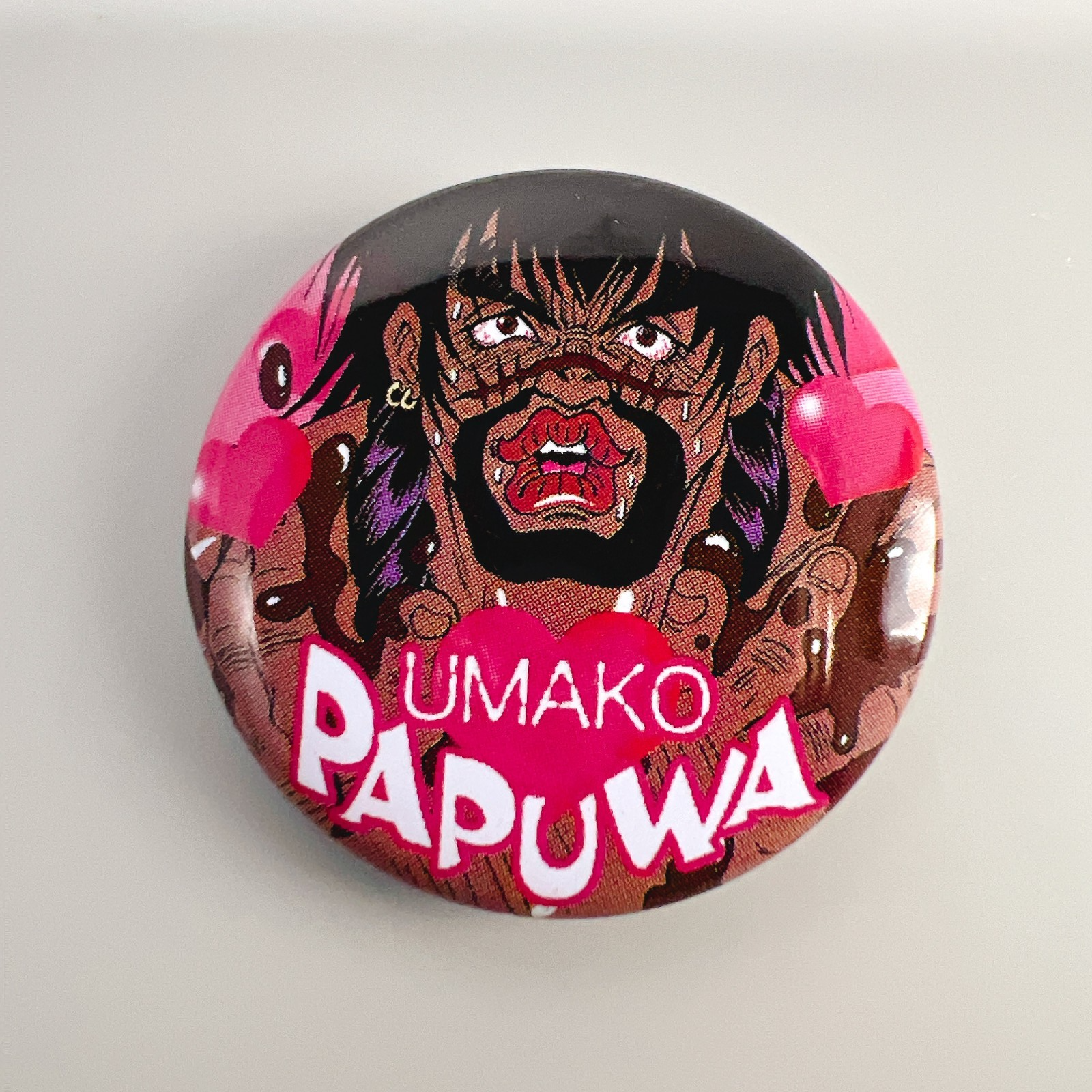
Umako is one of the island’s inhabitants — the kind of distinctive supporting character that gave Papuwa-kun much of its personality. The badge depicts the character with dark skin, black hair and beard, a strongly emphasized red mouth, and gold hoop earrings, set against a composition of pink hearts and warm brown tones. “UMAKO” appears in white lettering inside a pink heart; “PAPUWA” is also printed on the badge face.
Worth noting honestly: some character designs in 1990s Japanese manga and anime reflect visual conventions of the era that are now understood as problematic racial caricatures, and Umako’s design falls into that category. This is part of the historical record of the franchise. The character’s specific role within the series and voice casting are not documented in the available information, though the exaggerated, comedic styling fits the ensemble of outsized personalities that defined the show’s humor.
Pin Badges in the Early 1990s Anime Goods Scene
Can badges were among the most common and affordable forms of anime merchandise throughout the 1980s and 1990s in Japan. Closely tied to whatever was airing on television at the time, they circulated through anime shops, stationery stores, event venues, and gashapon machines. A badge might sell individually, come packed in sets, or turn up stacked in a bargain bin — small, inexpensive tokens of fandom produced at scale.
This badge carries the halftone dot pattern characteristic of analog offset printing, a pre-digital production method whose visual texture now reads as distinctly period-specific. The manufacturer cannot be confirmed without back-of-badge markings, which have not been documented for this piece. Merchandise tied to early Gangan titles was produced in large numbers for the Japanese domestic market but was rarely distributed overseas. Items like this one typically reach international collectors today through Japan’s used goods market, decades removed from their original release.


Comes straight from Japan — no middleman
$14.07
Ships internationally • More photos on the eBay listing