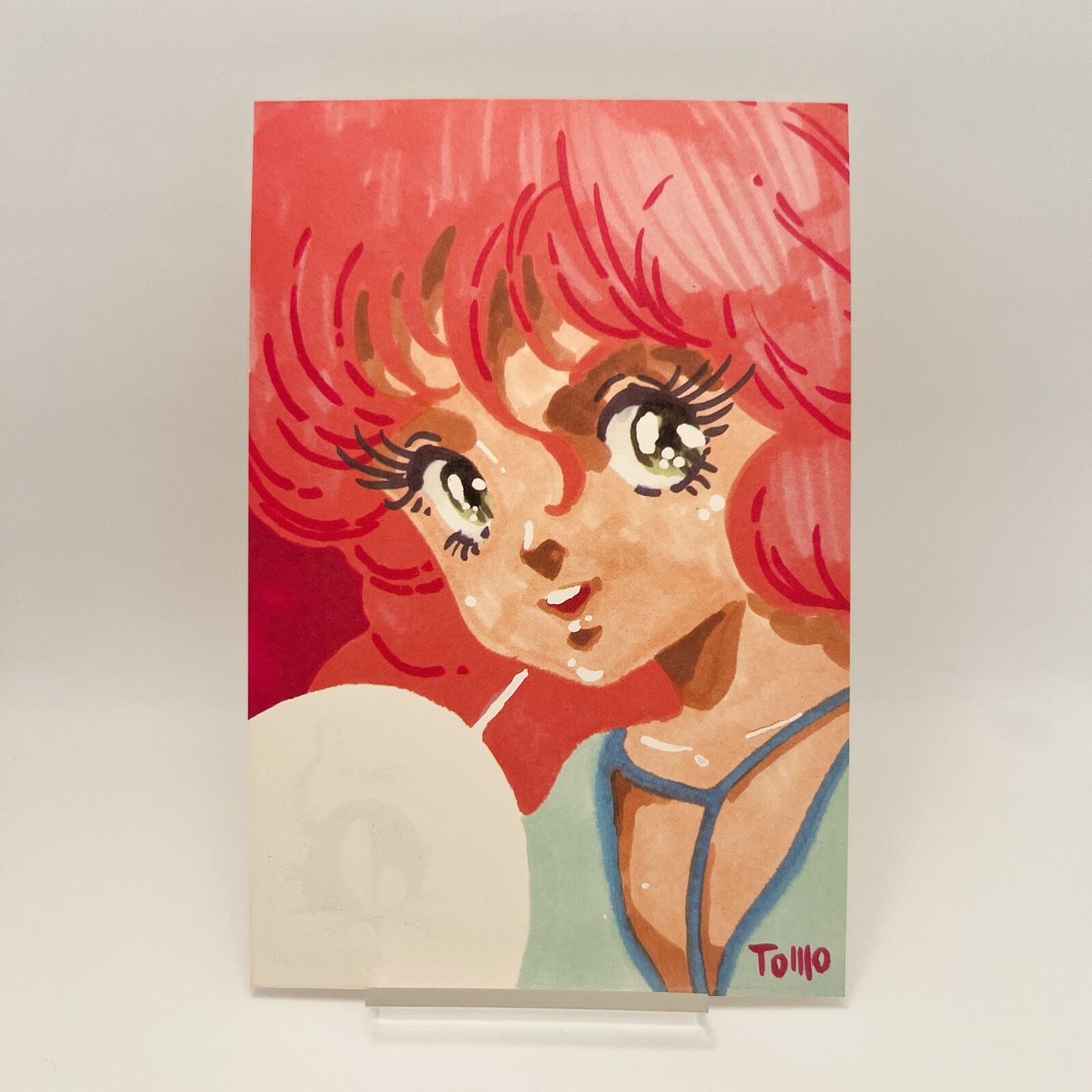
Cham Fau Animage Furoku Postcard from Aura Battler Dunbine (1984)

The Furoku Tradition and How This Card Came to Exist
The word “furoku” describes the free bonus items bundled with Japanese anime and manga magazines — not promotional afterthoughts, but a genuine part of the reading experience. Animage, the anime periodical published by Tokuma Shoten since 1978, was one of the defining venues for this tradition. At its early-1980s peak, an issue might include posters, stickers, clear files, or postcard-format illustrated cards printed on card stock. These were never sold separately; the only way to obtain one was to buy that specific issue when it appeared on the newsstand or by subscription.
This postcard features Cham Fau — also romanized as Cham Huau — a central character from Seisenshi Dunbine (Aura Battler Dunbine), and dates to approximately 1984, placing it at or just after the close of the series’ original broadcast run.
Aura Battler Dunbine and the Fairy at Its Heart
Aura Battler Dunbine aired on TV Tokyo from February 1983 to January 1984, running 50 episodes under the direction of Tomino Yoshiyuki — the creator best known internationally for the Mobile Suit Gundam franchise. Produced by Sunrise, the series set itself apart by fusing mecha action with high fantasy: protagonist Sho Zama is summoned into Byston Well, an underground fairy realm, where he pilots Aura Battlers — organic, insect-shaped mechanical beings — through a conflict unlike anything in the steel-and-space settings typical of the era. Character design was by Kogawa Tomonori, whose fine linework and expressive figures gave the series its distinctive visual identity.
Cham Fau belongs to the Ferario, a race of small fairy-like beings native to Byston Well. She accompanies Sho throughout the story, functioning as both comic relief and emotional anchor. Her design — vivid curly hair in warm pink-red tones, large rounded eyes, a petite build — balanced a playful fantasy aesthetic with real expressive range. The postcard illustration catches her in a relaxed, off-duty moment, wearing a light blue top and drinking from a cup with a straw. A signature appears in the lower right corner of the card; it may belong to one of the production artists, possibly Kogawa himself, though this has not been confirmed.
Why Showa-Era Anime Paper Goods Draw Collector Interest Today
This postcard sits at an intersection of several collector interests. It was produced during what Japanese pop culture historians describe as the first major anime boom — the years when Sunrise’s mecha output drew a generation of young viewers and drove anime magazine circulation to its highest recorded levels. Furoku items from this period were produced in quantities tied directly to magazine sales, with no retail alternative; the only path to ownership in 1984 was being a reader at the time.
More than 40 years later, physical items like this one are sought by collectors drawn to Tomino Yoshiyuki’s body of work beyond Gundam, to the history of Animage itself — the same magazine that provided the original serialization venue for Nausicaa of the Valley of the Wind — and to Showa-era anime paper goods as a category of tangible primary-source material from a formative moment in Japanese popular culture. Cham Fau herself has continued to appear on merchandise and revival releases in the decades since the original broadcast, a measure of how durable the connection between the character and her audience has remained.

Shipped directly from Japan by a small shop
$9.65
Ships worldwide from Japan • Full photos and details on the listing