Don Don Shee Omochi Alien Mascot Keychain

A Round Yellow Alien Built from Mochi and Kawaii Design
The character at the center of this piece is the Omochi Alien — a compact, yellow figure whose name fuses two unexpected worlds: omochi, the soft and pillowy Japanese rice cake, and the alien, the classic visitor from another world. It comes from a series called Don Don Shee, a name whose origins aren’t fully documented in major Japanese character merchandise databases. “Don Don” draws on Japanese onomatopoeia suggesting vigorous, repeated energy; the meaning of “Shee” is less clear. Whether Don Don Shee emerged from an independent creator, a small regional label, or another niche production channel hasn’t been confirmed — but that kind of low-profile origin is common in Japan’s vast ecosystem of original characters.
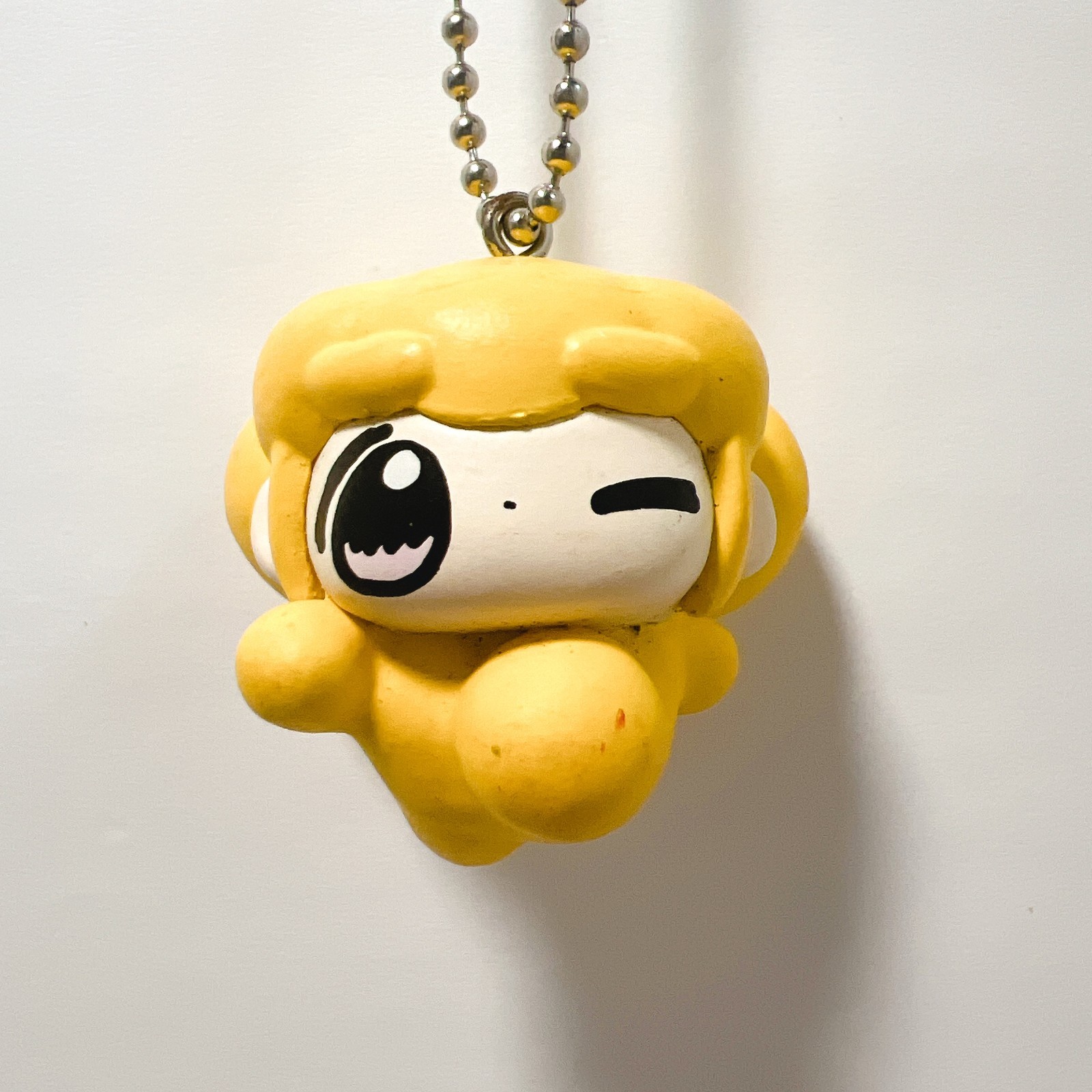
Visually, the Omochi Alien reads as kawaii immediately. The figure has a rounded, mochi-like silhouette in bright yellow, a white face dominated by two expressive eyes, and short stubby limbs. One eye is wide open with a dark pupil and white highlight; the other is rendered as a simple winking line. That asymmetry is deliberate design language. In Japan’s character goods tradition, a single wink signals warmth and playfulness, and it has been a go-to tool for making mascot figures feel approachable since at least the 1990s. The figure is likely made from soft vinyl or rubber — a material that gives it a slightly springy feel and the gently rounded finish that defines this whole family of small collectibles.
The Ball Chain Strap Format and Its Roots in Japanese Pop Culture
The metallic ball chain at the top of this figure is as culturally specific as the character itself. Ball chain mascot straps reached their peak in Japan during the late 1990s and through the 2000s, driven in large part by the feature phone era. The small, flip-style keitai denwa became personal expression devices as much as communication tools, and hanging a mascot figure from one became a widespread form of self-expression. The market for tiny, personality-packed figures expanded accordingly, spanning gacha capsule vending machines, food-toy inserts packaged alongside candy, and standalone retail releases.
Behind many of these figures sits the sofubi tradition — soft vinyl construction that traces its origins to the kaiju and hero toys of the 1960s. Scaled down and adapted for the mascot market, sofubi-style figures became a durable, tactile format: slightly rubbery, comfortable to handle, and forgiving over time. When smartphones replaced feature phones in the 2010s and daily strap use declined, the figures adapted rather than disappeared — shifting from phone accessories toward keychains and bag charms. The format has proven resilient because the appeal was always in the character, not the hook it hung from.
When Food Meets the Cosmic: Why the Concept Resonates
The Omochi Alien sits at a productive intersection in Japanese pop culture: the collision of the domestic and the cosmic. Omochi is one of the most culturally embedded foods in Japan — eaten at New Year’s, present at shrine ceremonies, and instantly associated with a soft, yielding texture. Pairing that image with a wide-eyed alien visitor produces the gentle absurdism that Japanese character design handles particularly well. This “food meets science fiction” crossover is a recurring theme in the broader kawaii landscape, where the joke isn’t delivered for laughs so much as built into the design itself: the familiar made strange, the strange made approachable.
For collectors outside Japan, the combination carries additional weight. Mochi is culturally legible — specific enough to feel authentic, familiar enough to land without explanation — and the alien concept travels across cultural contexts without friction. Add the winking face, the compact clip-anywhere format of the keychain strap, and a series name that doesn’t appear in the standard international databases, and the Omochi Alien becomes a small, self-contained example of a creative tradition that is both distinctly Japanese and intuitively appealing to a wider audience.


Found in Japan, packed by hand, sent worldwide
$14.07
Worldwide delivery from Japan • See the listing for condition and size