Winged Unchi-kun Soft Vinyl Squeaky Figure

Japan’s Lucky Symbol in a Squeezable Form
In Japan, the stacked-swirl poop shape carries a genuinely different cultural meaning than it does in most Western contexts. The Japanese word for poop, unchi, opens with the same syllable as un — the word for luck — making the shape a recognized good-luck symbol in popular culture. That wordplay explains why poop characters appear across Japanese toys, stationery, and novelty goods without the taboo the imagery typically carries elsewhere.
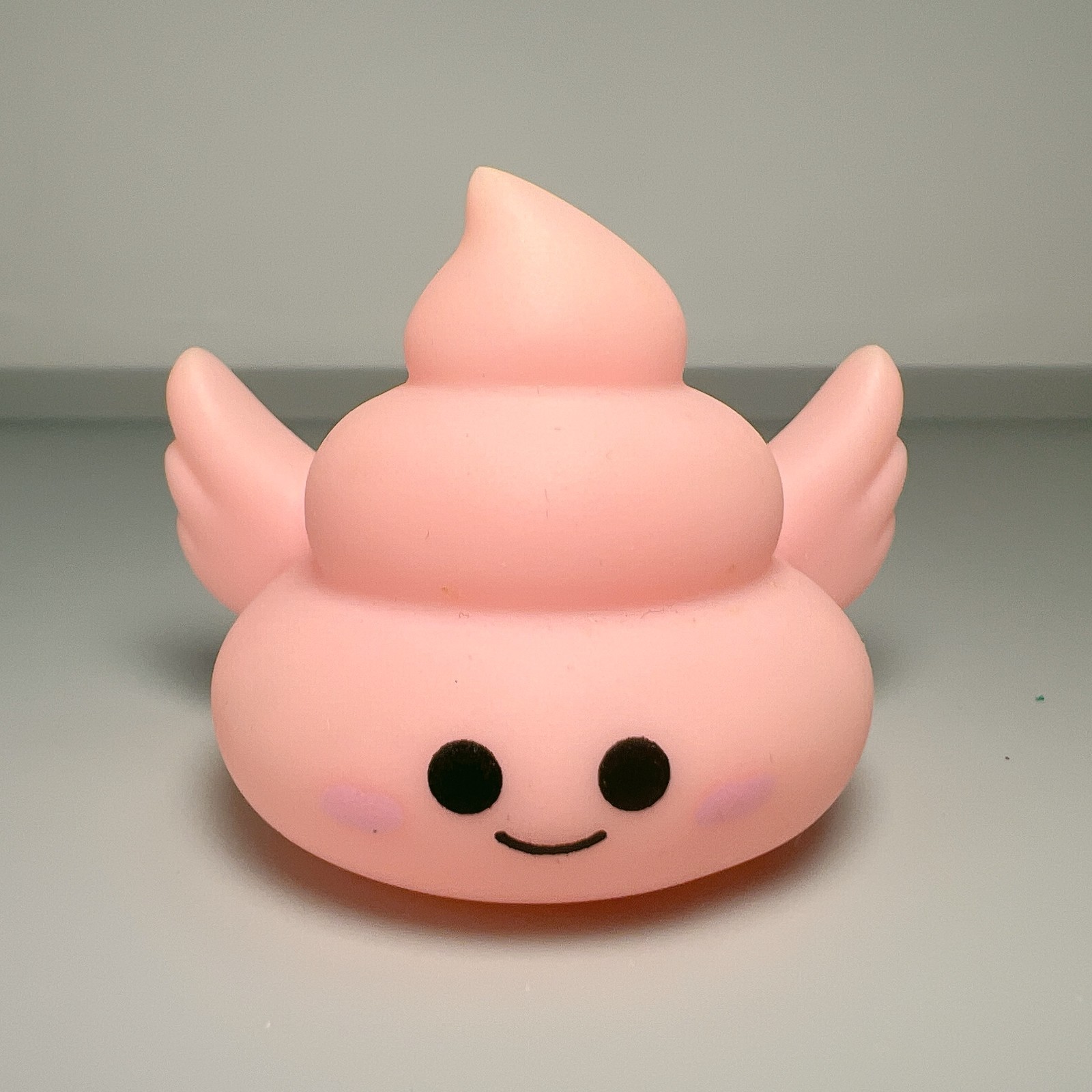
This piece is a squeaky figure made from soft vinyl — sofubi in Japanese collector shorthand — cast in matte pink with a small face and oval blush marks on its cheeks. The silhouette is the standard Japanese poop icon: three rounded tiers stacked upward, finishing in a spiral tip. A pair of small wings sets it apart from the basic form, a common variation technique in Japanese character toy design where one added element distinguishes a release from the standard version. The blush marks and simple expression are equally deliberate, drawn from the kawaii visual vocabulary that defines so much of Japanese character design.
Sofubi, Squeak Toys, and the Background of This Format
Soft vinyl has been a foundational material in Japanese toy production since the 1950s, used above all for character figures — kaiju, masked heroes, anime characters. Squeaky sofubi developed as its own category: popular as bath toys and affordable novelty goods, distributed through gashapon vending machines, festival stalls, candy-toy sets, and claw crane prize dispensers. Which channel this particular piece came through is not confirmed in available information.
Poop-themed character goods became a recognizable product category in Japan from the 1990s onward and grew into a mainstream part of the kawaii goods market through the 2000s. The triple-tier-plus-spiral silhouette eventually reached global recognition through the Unicode emoji standard — though in Japan, it was a toy-shelf fixture well before that. The manufacturer of this specific piece is not confirmed; no brand mark or packaging information is recorded in available sourcing data. Similar single-color squeaky sofubi have been produced by companies ranging from major names like Bandai to regional makers and prize-goods contractors, and attribution without a visible mark is difficult.
Wings, Blush Marks, and the International Collector Angle
International enthusiasm for Japanese sofubi has grown since the 2010s, partly through crossover with designer toy communities in the US and Europe. Expressive character design, soft vinyl material, and a distinctly Japanese production sensibility are all recognized draws for collectors outside Japan, and the format now has an established international audience of its own.
The winged design occupies a narrower position than the standard unchi form: wings, specific blush marks, and a matte single-color finish together place it within a smaller subset of what was made. The kawaii aesthetic running through the piece — rounded forms, restrained pink palette, understated expression — has dedicated collector communities internationally, and a figure that combines that aesthetic with the sofubi format and the unchi lucky-symbol tradition connects with more than one collecting conversation at once.


Boxed and cushioned for the trip from Japan
$11.95
Ships worldwide from Japan • Full photos and details on the listing