Pokemon Hexagon Eraser Featuring Absol and Flygon, No. 3

A Functional Eraser with a Collector’s DNA
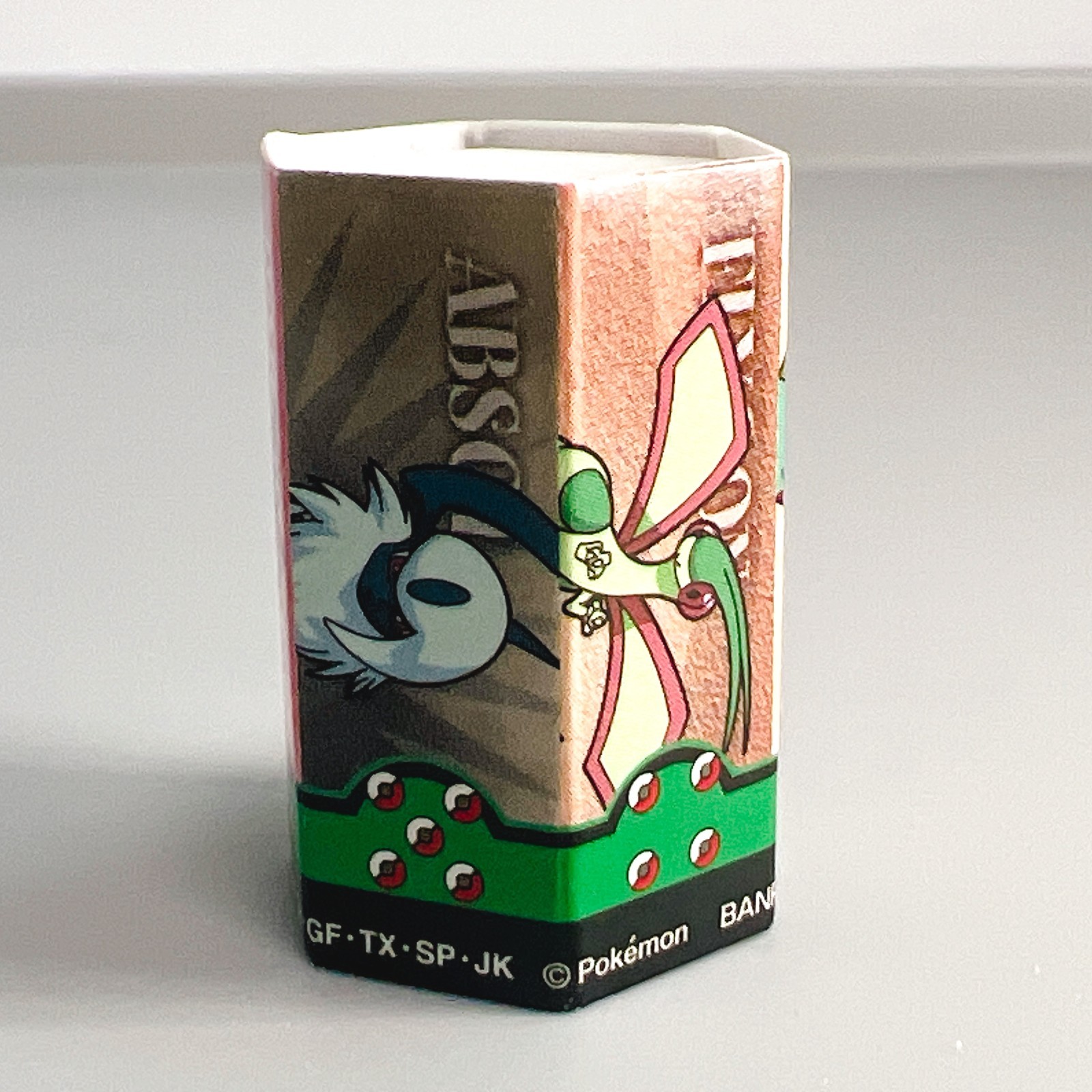
This item is a hexagonal (six-sided) eraser produced under the Pokemon license in Japan, most likely somewhere in the early-to-mid 2000s. Each of its six vertical faces carries a printed Pokemon illustration, and a shallow rectangular recess on the top suggests the design was intended for stacking or display as much as for actual use on paper. The “No. 3” designation points to a numbered series—whether that number identifies a product wave or a catalog code within a broader lineup isn’t definitively documented, but it signals that other numbers exist and can be tracked down.
The manufacturer credit points to Banpresto, a Bandai subsidiary best known for arcade prize merchandise, though the bottom marking “BAN” could also refer to Bandai proper. Either way, the four-party copyright notice stamped on the base—GF (Game Freak), TX (TV Tokyo), SP (ShoPro), and JK (JR Kikaku)—is the standard licensing formula used specifically for anime-connected Pokemon goods, distinguishing them from items tied only to the games.
Two Gen 3 Favorites, Six Sides to Show Them
Both Pokemon featured on this eraser are third-generation characters, introduced with Pokemon Ruby and Sapphire in Japan in 2002. That anchors the eraser’s release at 2002 at the earliest, with the overall aesthetic and copyright formatting pointing toward the 2003–2007 window.
Absol (Pokedex No. 359, Dark type) is the “Disaster Pokemon,” a creature whose habit of appearing near human settlements before natural calamities earned it a reputation for causing the very disasters it was actually predicting. Its white body and curved blade-like crest give it one of the more distinctive silhouettes of its generation, and it has retained a loyal following long after its debut.
Flygon (No. 330, Ground/Dragon type) is the final form of the Trapinch line. Known informally as the “Desert Spirit,” it lives in arid regions and is recognizable by the red goggle-like markings covering its eyes. Among Generation 3 fans, Flygon commands a devoted audience—partly for its design and usefulness in battle, and partly because it became one of the more frequently discussed omissions when Mega Evolutions were introduced in later games. That ongoing conversation kept it relevant well beyond its original release.
Character Erasers and the Japanese Stationery Tradition
In Japan, character erasers occupy a distinct space that blends everyday school supply with collectible object. The broader tradition traces back at least to the early 1980s, when Kinnikuman-themed rubber figures—known as Kinkeshi—sparked a collecting craze among children. Printed polyhedral erasers like this one represent a different approach: flat-faced, practical enough for homework, and easy to arrange on a shelf between uses.
Pokemon goods of this type circulated through candy shops, stationery stores, and general retailers during the franchise’s second major domestic boom in the early 2000s. Whether this particular eraser came packaged with a snack, as shokugan food-toy merchandise often did, or was sold separately isn’t established by available records. What is clear is that items like this were distributed within Japan with no formal international export, meaning they reach collectors abroad today only through the secondary market.
The pairing of Absol and Flygon on a single item, the unusual hexagonal format, and the anime-era four-holder copyright notation give this eraser a specific place in early-2000s Pokemon merchandise history—one that appeals to collectors focused on that particular chapter of the franchise.


Shipped from Japan, tested where noted in the listing
$14.07
Ships worldwide from Japan • Full photos and details on the listing