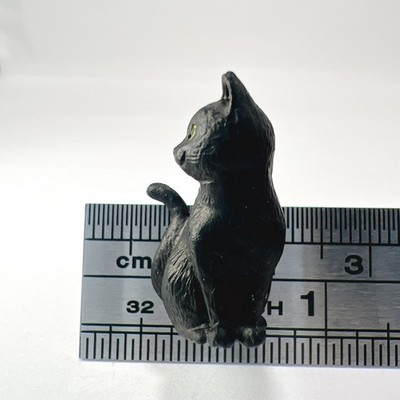
MIDORI Miniature Cat #6: Numbered Black Cat Magnet Figure From Japan

A Numbered Figure in the Zakka Tradition
The Miniature Cat Series from MIDORI Japan belongs to a category Japanese retailers have carried for decades: small, carefully made objects that are genuinely useful but also satisfying to look at. This design philosophy has a name — zakka, often loosely translated as “miscellaneous goods” — and it describes a whole segment of Japanese retail culture that took shape through the 1990s and 2000s, blending Nordic-influenced simplicity with the warm appeal of cute animal motifs.
This piece is number six in a numbered series, a format that was widespread in Japanese stationery and gift shops during the 2000s and 2010s. Each cat in the lineup carries a sequential number, which distinguishes it clearly from gacha (capsule-machine figures) or shokugan (candy-toy figures): there is no random draw, no blind box, just a specific item with a known identity that can be tracked alongside its siblings. How many numbers the full series runs to is not confirmed in available records, but the format itself signals at least six distinct cats. The magnet on the base lets the figure attach to a refrigerator, whiteboard, or any metal surface — placing it firmly in the zakka category of objects that earn their space by being both decorative and functional.
The Black Cat in Japanese Culture and Design
The figure depicts a seated black cat with green eyes and a gently upward-curling tail. It is an original design — not tied to any anime, manga, or media franchise — rendered in a style that leans realistic while remaining compact and display-friendly.
In Japan, the black cat occupies a different cultural position than in many parts of the West. Rather than a symbol of ill fortune, it has traditionally been associated with protection and good luck, sitting within the same broad tradition as the maneki-neko — the beckoning cat seen at shop entrances across the country. That association has fed a durable market for cat-themed zakka in Japan, stocked at specialty retailers, Loft, Tokyu Hands, and similar shops over many years. The green eyes on this figure are a design choice rather than a reference to any specific character or franchise, a visual accent that makes the small piece more striking without anchoring it to any particular story.
Why Collectors Outside Japan Seek These Out
MIDORI’s distribution has generally centered on the Japanese domestic market, with limited official presence in international retail. That makes pieces from this series harder to find outside Japan, which draws interest from buyers in Europe, North America, and elsewhere who follow Japanese zakka and kawaii goods.
The numbered format adds its own momentum: owning #6 naturally raises the question of what the rest of the lineup looks like. And the black cat itself resonates well beyond its Japanese context — associated in Western culture with Halloween, folk magic, and gothic aesthetics, a Japanese-made black cat figure sits at an intersection that appeals to more than one collecting sensibility at once.
One note on context worth keeping in mind: this piece may appear under animation merchandise categories on some platforms, but it is not an anime-licensed product. It is an original-design animal figure, best understood as Japanese zakka rather than character merchandise — a small, considered object made to live quietly in someone’s daily surroundings.


Boxed and cushioned for the trip from Japan
$14.07
Ships worldwide from Japan • Full photos and details on the listing