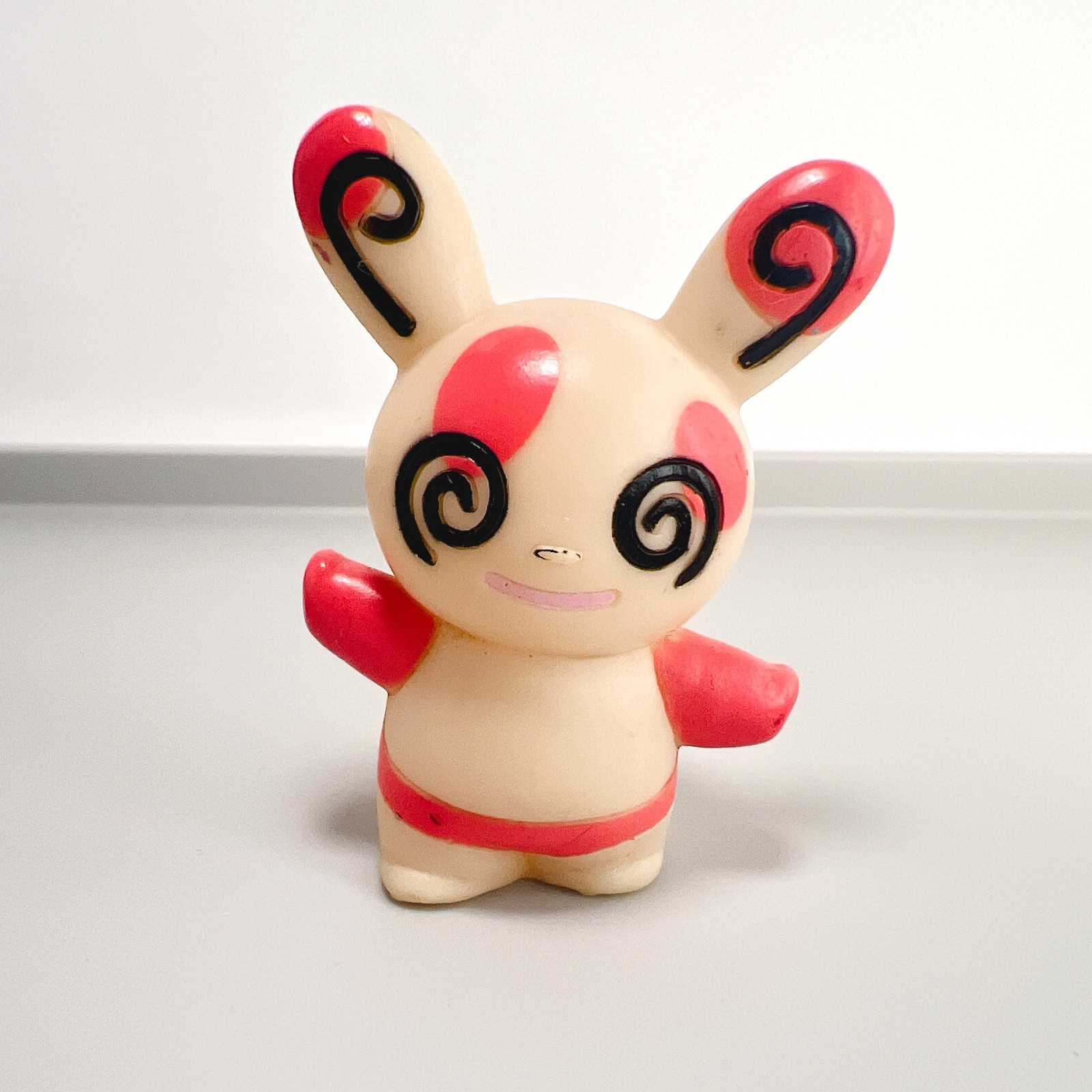
Spinda Pokémon Kids Sofubi Figure by Bandai

The Pokémon Kids Line and Its Sofubi Roots
The Pokémon Kids series is one of Bandai’s longest-running Pokémon toy formats, launched alongside the franchise’s earliest generations in the late 1990s and continuing to this day. Each figure is molded from soft vinyl — sofubi — a manufacturing method with deep roots in Japanese toy production: PVC is poured into a mold and set, producing figures with a distinctive flexible weight and vivid coloring that sets them apart from harder plastics. The technique traces its lineage back to Japan’s postwar toy industry, where it was used for kaiju monsters and tokusatsu hero figures before finding its way into licensed character merchandise.
Originally sold as food toys (shokugan), a uniquely Japanese retail format in which a small candy accompanies each figure, Pokémon Kids were stocked in convenience stores, supermarkets, and toy shops throughout Japan. Because the format was built around casual, wide distribution rather than deliberate collectability, a well-preserved individual figure carries real meaning for those who seek them out today.
Spinda and the Mechanic That Makes Every One Different
Spinda (National Pokédex No. 327) is a Normal-type Pokémon introduced in the third generation with Pokémon Ruby and Sapphire, released in Japan in 2002. Its design features a cream-colored, rounded body with red-and-black spot markings, distinctive spiral eyes, and a deliberately wobbly, unsteady movement style built into its character concept — referenced in several of its in-game moves.
What sets Spinda apart from the vast majority of Pokémon is a specific in-game mechanic: every individual Spinda has a unique arrangement of its spot markings, determined by that creature’s personality value. In theory, no two Spinda in the game share exactly the same pattern. This design detail generated genuine discussion at the time of Ruby and Sapphire‘s release and has remained a notable piece of Pokémon trivia among fans ever since. It is a rare case of a character whose defining trait is individual variation — which gives even a single, fixed figure of the character an interesting conceptual resonance.
A Japan-Original Item Within a Global Franchise
Pokémon Kids figures were produced for the Japanese domestic market and were not part of official international retail distribution, which means they were simply unavailable outside Japan through normal channels. For fans abroad — particularly those with a connection to the third generation, which holds strong nostalgic pull among players who encountered Ruby and Sapphire in the early 2000s — a figure of this kind represents a tangible link to a specific chapter of the franchise that most of them experienced only through games and animation.
The sofubi format adds its own collector context. Japanese soft-vinyl toys have earned a dedicated following among enthusiasts of Japanese collectibles more broadly, valued for the material’s tactile quality and the production tradition it carries. A Pokémon Kids sofubi figure sits within that lineage while remaining firmly rooted in one of the most widely recognized entertainment properties in the world — a combination that speaks to several overlapping communities of collectors and fans at once.


Boxed and cushioned for the trip from Japan
$18.85
Ships internationally • More photos on the eBay listing