Joe Higashi Keshi Figure: A Green Vintage Collectible from SNK's Fatal Fury

What You’re Looking At
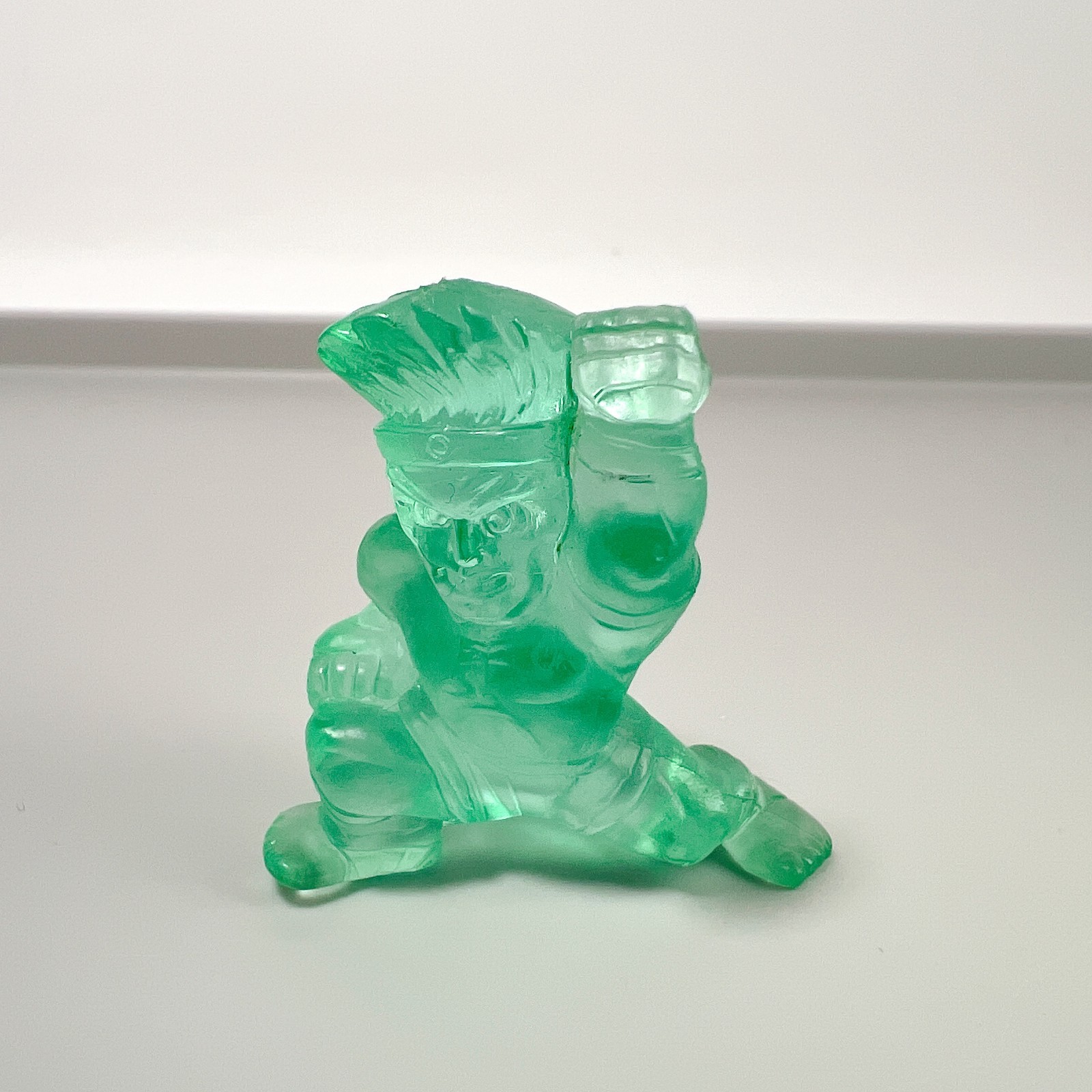
This is a keshi figure — a small, solid figurine molded in a single translucent green color from a flexible plastic or rubber-type material. In Japan this category of toy is called keshi or keshigomu ningyo (literally “eraser figure”), and while the name suggests they function as erasers, many examples produced from the late 1980s onward were essentially non-functional — made for collecting rather than writing-desk use. The subject here is Joe Higashi, one of the original trio of protagonists from SNK’s 1991 arcade fighting game Fatal Fury. He’s captured in a dynamic combat pose: right fist raised, left knee to the ground, with muscular detail and the folds of his clothing sculpted into the figure. The green coloring is a production variant — keshi figures of the same sculpt were typically issued in multiple single colors, and collecting the different versions was part of the appeal.
Fatal Fury, SNK, and the Character Behind the Figure
Fatal Fury launched in arcades in November 1991, published by SNK on its NEOGEO platform. Alongside Capcom’s Street Fighter II, it helped define the competitive fighting game boom of the early 1990s, spawning a series of sequels through the mid-to-late decade — Fatal Fury 2 (1992), Fatal Fury Special (1993), Fatal Fury 3 (1995), and the Real Bout series (1995–1997). SNK also produced an OVA anime adaptation between 1992 and 1994, which broadened the franchise’s reach beyond the arcade. Joe Higashi was there from the beginning. A Japanese fighter who traveled to Thailand to master Muay Thai and become its world champion, Joe rounds out the original team alongside brothers Terry and Andy Bogard. His look is immediately recognizable — spiky blond hair, a headband, and fighting shorts — and his personality is hot-blooded and reckless in a way that made him a fan favorite. He continued appearing in SNK’s long-running King of Fighters series, which launched in 1994, meaning fans who never played the original Fatal Fury games likely know him anyway.
The Keshi Tradition and Why It Matters to Collectors
The keshi figure as a format has roots in a distinctly Japanese toy culture. The format was popularized in the early 1980s — most famously by Bandai’s Kinnikuman eraser figures, which became a social phenomenon and opened the door for other anime and game franchises to produce their own. By the early 1990s, fighting game characters from SNK and Capcom — Fatal Fury, Art of Fighting, Samurai Shodown, Street Fighter — were well represented in this format. These figures were inexpensive and widely sold through dagashi-ya (penny-candy shops), stationery stores, and capsule toy machines, primarily within Japan. As a result, they were rarely distributed abroad at the time, and today they reach international buyers almost exclusively through individual import. For collectors drawn to NEOGEO-era games, to the keshi format itself, or to the particular visual aesthetic of a translucent monochrome sculpt from the early 1990s, a figure like this sits at the intersection of several distinct collecting interests.


Price: $12.23 | View on eBay