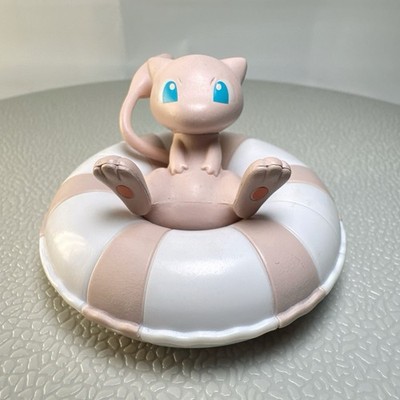
Mew Pokemon Pukapuka Ukiiwa Collection Gashapon Figure by Bandai

The Pukapuka Ukiiwa Collection and What It Depicts
The Pukapuka Ukiiwa Collection is a line of officially licensed Pokemon miniature figures produced by Bandai and sold through Japan’s Gashapon capsule vending machines. The name gives away the concept immediately: “pukapuka” is a Japanese onomatopoeic word for something bobbing gently on the surface of water, and “ukiwa” means float ring — the inflatable ring familiar to anyone who has spent time at a beach or pool. Bandai applied that summer theme to Pokemon characters, sculpting each one seated inside a float ring as a self-contained capsule toy.
This listing features the Mew version of that series. Mew is rendered in its characteristic pale pink, with large blue eyes, a long slender tail, and small orange paw pads — positioned within the ring in the relaxed, unhurried attitude the series concept calls for. The exact release year is not confirmed, but the sculpting style and finish are consistent with Bandai’s modern Gashapon production, most likely from the 2010s onward.
How Mew Became Pokemon’s Most Storied Character
Mew holds entry No. 151 in the original Pokedex — the final slot of the first generation — and is described within official Pokemon lore as the ancestor of all Pokemon. That framing gave it mythological weight from the franchise’s earliest days. What amplified it further was Mew’s status in the original Game Boy titles: it was not obtainable through normal gameplay. Instead, it circulated as a hidden Pokemon, passed around through playground rumors, unofficial glitches, and an elaborate web of urban legends that spread across countries and continents. For an entire generation of players, Mew was the thing you had heard about but almost certainly never legitimately owned.
Its profile widened dramatically with the first Pokemon feature film, Mewtwo Strikes Back, released in 1998 in Japan and shortly after across North America and other international markets. Mew played a central role in that story, and the film’s broad success introduced the character to audiences well beyond dedicated game players. In the decades since, Mew has continued to appear across the franchise — typically as a special, event-distributed Pokemon rather than a standard catch — and that carefully maintained sense of being a special case has held through to the present.
Gashapon Culture and How These Figures Reach Collectors Worldwide
Gashapon is a registered trademark of Bandai, and the format has operated in Japan since approximately 1977. The machines — coin-operated capsule dispensers — are placed throughout Japan in shopping malls, arcade halls, train stations, and tourist destinations. Each pull releases a sealed plastic capsule containing a single figure. Bandai has held official Pokemon licensing from The Pokemon Company throughout most of the franchise’s history and has been one of the primary manufacturers of Pokemon capsule toys since the late 1990s.
Because these machines are Japan-specific distribution points, the figures do not pass through standard international retail. Collectors outside Japan typically obtain Gashapon pieces through importers or individual sellers sourcing directly from Japan. Bandai’s Pokemon Gashapon output is recognized for precise molding and careful paint application relative to its compact scale — qualities that have sustained the format’s reputation among collectors across many countries.


Boxed and cushioned for the trip from Japan
$16.09
Ships internationally • More photos on the eBay listing