Mew, Jigglypuff, and Galarian Ponyta Ichiban Kuji E Prize Plate

What This Plate Is and Where It Comes From
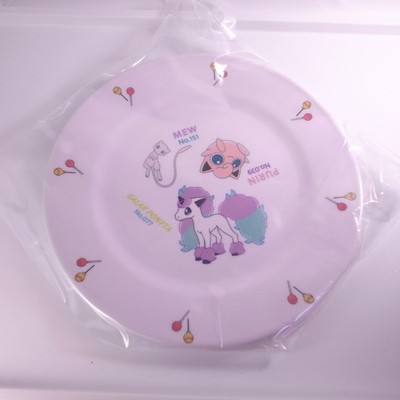
This round collectible plate was produced by Bandai Spirits as the E Prize in one of their Ichiban Kuji lottery draws centered on Pokémon. Its surface features three characters printed side by side — Mew (No. 151), Jigglypuff (No. 039), and Galarian Ponyta (No. 077) — with each one’s English name, Japanese name, and Pokédex number printed alongside it. Framing the whole design is a repeating border of red-and-yellow lollipop candy running around the outer edge. The material is believed to be melamine resin or a similar plastic composite — not ceramic — though the exact specification has not been confirmed from official product documentation. The plate circulates sealed inside a clear protective film. Because Galarian Ponyta first appeared in Pokémon Sword and Shield in 2019, this piece was produced sometime after that year.
The Three Pokémon and Their Stories
Mew is the 151st and final entry in the original Kanto Pokédex, and one of the franchise’s most enduring figures. Official lore positions it as carrying the genetic blueprint of every known Pokémon — effectively the ancestor of them all. At the time of the original 1996 Game Boy releases, Mew was deliberately kept out of reach through normal gameplay, which helped establish it as something genuinely rare and mysterious within the game’s own fiction. It later took a pivotal role in the first Pokémon theatrical film, which opened in Japan in 1998 and reached international audiences in 1999.
Jigglypuff (No. 039) is a first-generation Normal/Fairy-type that became a long-running side character in the Pokémon anime. Its defining bit — singing audiences to sleep, then scrawling on their faces with a marker in frustration — gave it a comedic personality distinct from most of the cast. That characterization landed equally well with Japanese and North American audiences, where the early English dub of the anime introduced it to viewers during the height of the late-1990s Pokémon boom.
Galarian Ponyta (No. 077) is a regional variant of the original Kanto Ponyta, appearing for the first time in Pokémon Shield. Where the Kanto version is a Fire-type horse with a fiery mane, the Galarian form has soft white fur, a flowing pastel mane, and a Psychic typing — a design that draws strongly on unicorn imagery. Game Freak revealed it during a 24-hour Pokémon Sword and Shield livestream, and it generated immediate, widespread discussion across international social media. It remains exclusively associated with the Shield version of the game.
Ichiban Kuji and Japan’s No-Lose Lottery System
Ichiban Kuji is a prize goods brand operated by Bandai Spirits, a subsidiary of the Bandai Namco group dedicated to figures and collectibles. Draws are held at physical retail locations across Japan — primarily Lawson and FamilyMart convenience stores, along with toy and hobby retailers such as Animate. The mechanics are simple: every ticket drawn wins something, with no blank results. Prizes are ranked from A (usually figures) down through B, C, D, E, and a Last One prize awarded with the final ticket. The E tier typically covers practical or display items — plates, mugs, and clear files appear regularly at that level.
Because the entire system runs through brick-and-mortar stores in Japan, there is no direct retail path for overseas buyers. Items that reach the international market come from secondary sales after a lottery run has ended, making sealed, unopen stock the form in which they most commonly travel abroad. The Pokémon lineup within Ichiban Kuji has spanned many separate themed draws over the years; the specific series name for this plate has not been confirmed in available documentation.


Listed in our eBay store and sent from Japan
$14.07
International shipping available • Ask us anything before you buy