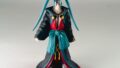
1980s Saint Seiya Menko Card Featuring Phoenix Ikki

The Franchise: Saint Seiya in Japan and Worldwide
Saint Seiya began as a manga by Masami Kurumada, serialized in Weekly Shonen Jump from 1985 to 1990. Toei Doga — now known as Toei Animation — adapted it for television on TV Asahi from October 1986 through April 1989, producing 114 episodes. The story follows young warriors called Saints who channel a cosmic energy called Cosmo to defend the goddess Athena, each Saint tied to a Greek constellation. The series peaked in both ratings and merchandise around 1987 to 1988.
Its international reach has been substantial. Saint Seiya aired in France as Les Chevaliers du Zodiaque, across Spanish-speaking Europe and Latin America, in Brazil, Italy, and much of Asia. In France and Brazil especially, it developed followings comparable to those in Japan. A Netflix CGI reboot appeared in 2019, underscoring the franchise’s continued global presence.
Phoenix Ikki: The Solitary Fighter
Of the five Bronze Saints at the center of the story, Ikki — bearer of the Phoenix Cloth — occupies his own category. He is the older brother of protagonist Seiya but trained apart from the group on a remote island of extreme hardship. His signature technique, the Phoenix Illusion Fist (Houou Genma Ken), attacks the opponent’s mind rather than the body — an approach that mirrors his character: unconventional, psychologically complex, and formidable on his own terms.
The image on this card — bare chest, long black hair, a meditative stance against a red-orange background — is a well-established representation of Ikki before combat, a composition that recurs throughout official Saint Seiya artwork. Among fans internationally, he has consistently drawn a dedicated following; in France and Brazil, he rivals the protagonist in popularity.
Menko Cards: A Japanese Format with Showa-Era Roots
Menko are a Japanese tradition with Edo-period origins, originally a game in which players slammed cards to the ground to flip the opponent’s piece. By the 1970s and 1980s, character menko featuring anime and tokusatsu heroes had become the dominant form, sold at dagashiya — the neighborhood penny-candy shops central to childhood for that generation — and at festival stalls.
Saint Seiya menko were produced under official license during the anime’s broadcast years. The copyright notice on cards of this type, citing Masami Kurumada, Shueisha, and Toei Doga, confirms their licensed status — and also dates them: Toei Doga became Toei Animation in 1998, placing cards bearing the old name before that year. Given the broadcast window, the 1986–1989 period is the most likely point of manufacture.
Because menko were used in actual play, surviving examples from this era often show modest signs of age — slight edge wear, some discoloration — typical of paper objects approaching forty years old. The format was never produced outside Japan, which gives these cards a particular significance for international collectors: they are a form native to Japanese material culture, now recognized as artifacts of the Showa-era anime boom.

Found in Japan, packed by hand, sent worldwide
$7.86
Worldwide delivery from Japan • See the listing for condition and size