Bandai Naruto Ninja Zukan Gashapon Chibi Figure

A Chibi Figure from Japan’s Capsule Machine Tradition
This piece belongs to the Naruto Ninja Zukan (NARUTO NINJA ZUKAN) line — a gashapon series produced by Bandai. Gashapon is Bandai’s registered trademark for its coin-operated capsule vending machines and the merchandise inside them: you insert a coin, turn the handle, and a capsule drops out containing a small, pre-painted figure that requires little or no assembly.
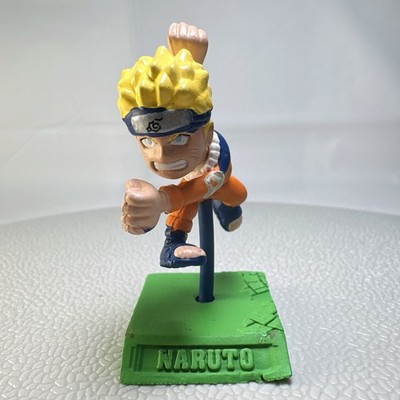
The Ninja Zukan line offered chibi-style figures — sculpts built around the exaggerated, compact proportions that were a staple of Japanese character merchandise in the early 2000s. This figure depicts Uzumaki Naruto in a running or action pose, mounted on a rectangular green base embossed with the word “NARUTO” and textured to suggest cracked earth. That base detail anchors the figure in the visual language of the series rather than treating it as a generic character toy. Bandai, one of Japan’s largest toy manufacturers, operates its gashapon line under official licenses and is distinguished from generic capsule toys by consistent production quality under the Bandai name.
Naruto and the Jump Era It Came From
NARUTO is a manga by Masashi Kishimoto that ran in Weekly Shonen Jump from September 1999 through November 2014, spanning 700 chapters. The anime, produced by Studio Pierrot and broadcast on TV Tokyo from October 2002, ran for 220 episodes through February 2007 before continuing as NARUTO: Shippuden through 2017.
The series follows Uzumaki Naruto, a young ninja from the Hidden Leaf Village who dreams of becoming Hokage — the village’s strongest and most respected leader. He carries a sealed nine-tailed fox spirit within him and builds his story through bonds with allies and mentors. His visual identity — spiky blond hair, a blue forehead protector bearing the village’s leaf symbol, and a bright orange-and-blue jumpsuit — is reflected faithfully in the figure’s sculpt. At its height, NARUTO stood alongside One Piece and Bleach as one of the “Big Three” titles that defined Weekly Shonen Jump’s international reach in the early-to-mid 2000s. The Ninja Zukan gashapon line is believed to date from roughly the 2002–2006 window of the anime’s first run, though the specific release year and which wave this figure belongs to cannot be confirmed from available sources alone.
Why This Era of Merchandise Resonates Beyond Japan
NARUTO reached international audiences early. VIZ Media’s English releases and broadcast partnerships across North America, Europe, and Asia built a global fanbase that followed the franchise in real time. The Ninja Zukan gashapon line, however, was sold primarily through vending machines inside Japan — a domestic product with limited official overseas distribution during its original release window.
The name “Ninja Zukan” reflects the design logic behind the series: zukan means illustrated field guide or encyclopedia in Japanese, and Bandai structured the line as a character roster meant to be collected one capsule at a time, across multiple waves. For fans who grew up watching the anime outside Japan, figures from this period represent a part of the franchise that existed on the other side of the screen.


Boxed and cushioned for the trip from Japan
$14.07
Worldwide delivery from Japan • See the listing for condition and size