Ultra Q Menko Cards From Japan's Showa Era

A Game Card Born From Japan’s Kaiju Craze
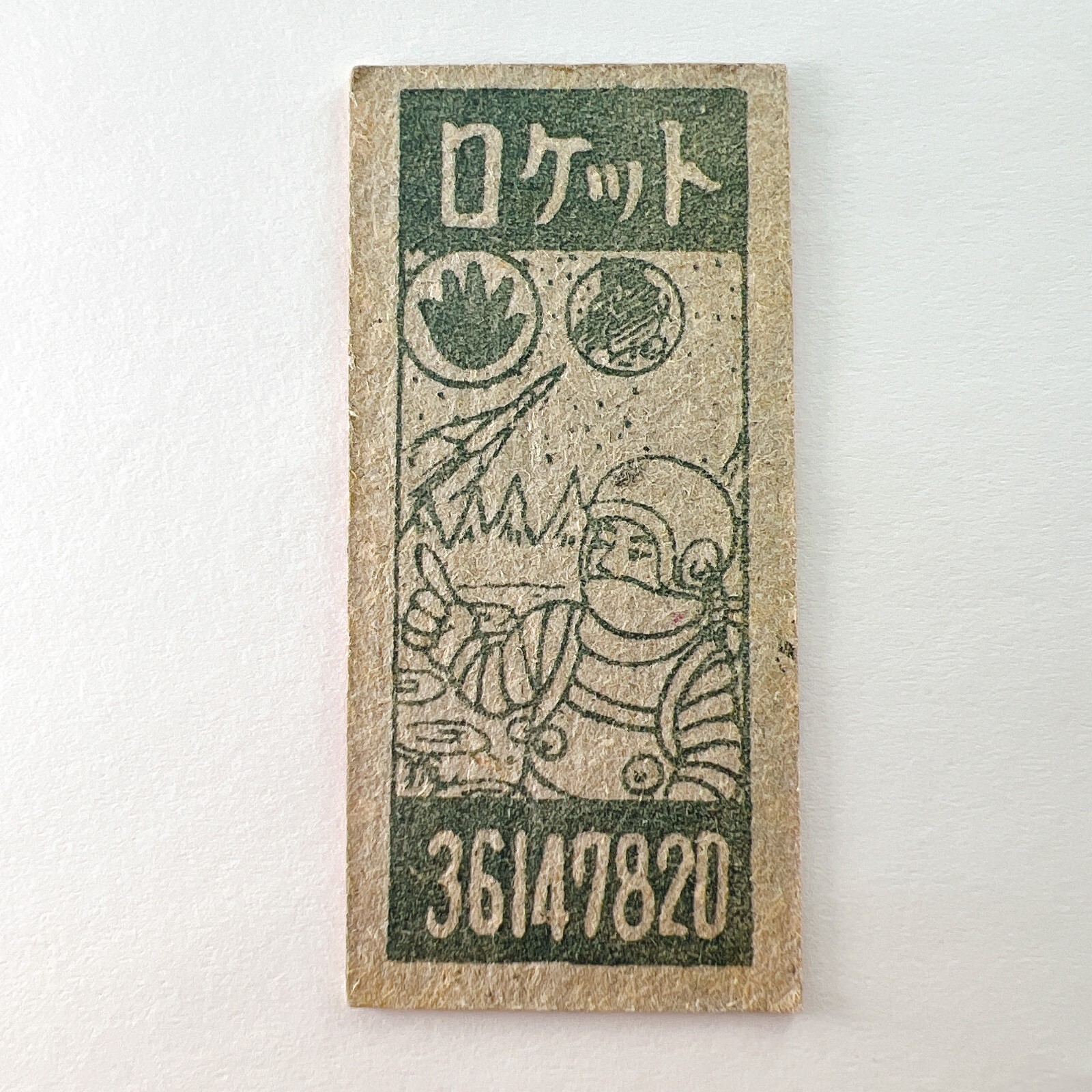
Menko are thick, rectangular playing cards with roots in Japanese tradition going back centuries. The game is simple but physical: players slap cards against the ground, trying to flip an opponent’s card face-up. Cards that saw real use collected worn edges and rounded corners as a result. During the Showa era, character menko featuring monsters, heroes, and robots flooded Japan’s dagashi-ya — the small candy-and-toy shops where children spent their pocket money — and became one of the defining collectibles of postwar youth culture.
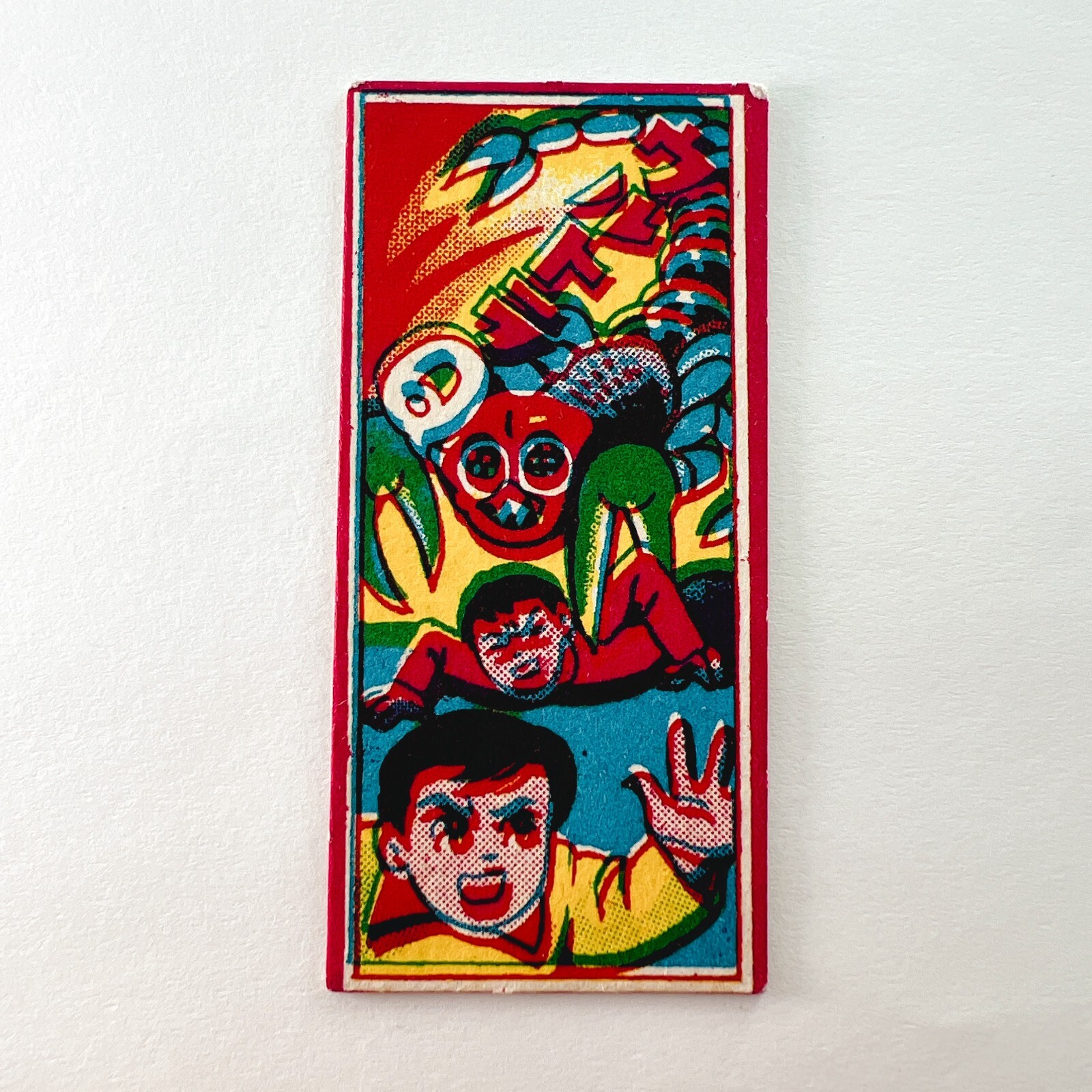
This card is printed in the halftone offset style typical of the period, with bold primary colors and the dramatic illustration approach that characterized Showa kaiju merchandise. The codes on the card face — such as “SD” or “6D” — were game mechanics, functioning as rankings or point values in play. The illustration depicts a large, scorpion-like, multi-limbed creature looming over two human children, a compositional choice common to the era: placing a monster at overwhelming scale beside small human figures to convey menace. Identifying the specific creature from artwork alone is difficult; arthropod-type monsters did appear in Ultra Q, including Todra in Episode 26, but a definitive identification without further documentation isn’t possible. Ultra Q menko sets typically comprised dozens of cards, and this card was almost certainly one piece in a larger monster roster.
Ultra Q — The Series That Launched the Ultra Franchise
Ultra Q aired on TBS from January to July 1966 — 28 black-and-white episodes produced by Tsuburaya Productions, the studio founded by special-effects director Eiji Tsuburaya. It was Tsuburaya’s first continuous tokusatsu television series, and it broadcast directly before Ultraman debuted that same summer, making it the original entry point of what became one of Japan’s most enduring franchise families.
The show’s structure was genuinely unusual. There was no fixed superhero; each episode introduced a new monster, alien, or supernatural phenomenon, while the regular cast — a pilot, a photojournalist, and a magazine editor — investigated from the human side without superhuman ability to fight back. The format drew comparisons to The Twilight Zone, blending science fiction, kaiju spectacle, and psychological unease in an omnibus structure. Its tagline: “THE SPACE AGE IS NOW.”
What Separates Ultra Q Merchandise From the Rest
Because Ultra Q predates Ultraman, its merchandise was produced at the very dawn of kaiju television tie-in goods. The series broadcast in monochrome, which gives illustrated menko cards a particular distinction: they depict the show’s monsters in full color — something the original broadcast never provided. A black-and-white television series represented by vivid, hand-drawn card illustrations is a contrast that sets Showa-era Ultra Q goods apart visually from anything produced under the later Ultra titles.
Interest in Showa tokusatsu has grown steadily among collectors outside Japan, and Ultra Q’s position as the direct ancestor of the entire Ultra franchise carries real weight within that community. Menko are also an unusual category of collectible because they functioned as game pieces, not display items — meaning surviving examples in well-preserved condition are considerably less common than the original production volumes might suggest.

Found in Japan, packed by hand, sent worldwide
$11.95
Worldwide delivery from Japan • See the listing for condition and size