Type “Black” into an eBay search and you’ll find thousands of listings. Narrow it to Japanese sellers — specifically to authenticated, near-mint items with original packaging — and a very different picture emerges: leather jackets with an almost sculptural patina, camera lenses rarer than their silver siblings, vintage watches with military-style dials, fountain pens from discontinued lines. The word “Black” on a Japanese collectibles listing is less a color description and more a shorthand for a whole set of values: limited production, premium grade, exceptional preservation. Understanding what sits behind that single word is the difference between scrolling past a bargain and overpaying for the wrong thing.
A Color With Deep Roots — and a Long History of Premium Status
Black has carried weight in both Western and Japanese culture for centuries, but the reasons differ in instructive ways. In the West, black clothing shifted from mourning and clergy into high fashion after Coco Chanel’s little black dress in 1926, and then into outright rebellion through motorcycle culture — Schott’s Perfecto jacket, introduced in 1928, became the definitive image of the outsider. Cameras followed their own black trajectory: Leica’s M3 in black paint, circulating in the 1950s for military and press use, is now one of the most coveted objects in the collector camera world. Pentax followed decades later with black versions of its FA Limited lenses, produced in smaller numbers than the silver variants. In each case, the black version started as utilitarian or discreet and ended up rare.
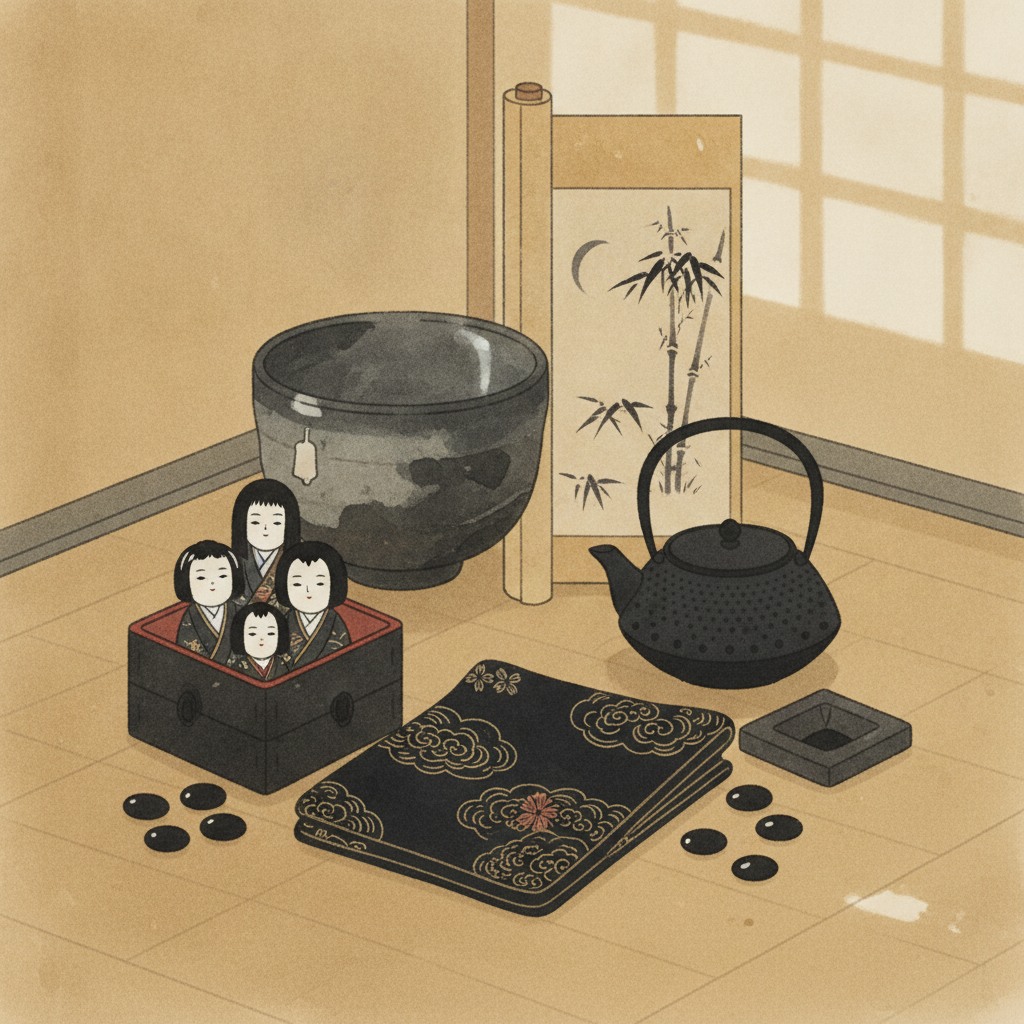
In Japan, black — kuro — carries a different, older prestige. Black lacquerware (kokushitsu) has been a mark of refinement since the Heian period. Samurai armor was lacquered black to signal rank. In the tea ceremony, the black raku tea bowl sits at the aesthetic summit. This deep cultural equation of black with formality and seriousness translated smoothly into modern Japanese consumer goods: manufacturers learned that a black edition of a watch, camera, or pen reads as the premium version, and they reinforced the perception by deliberately keeping production numbers low. A black model was rarely the entry-level option — it was the one you waited for.
The Categories Worth Knowing
Because “Black” cuts across product types rather than defining one, it helps to know where the serious collector interest actually concentrates.
Leather goods and fashion cover some of the most liquid items in this space. The Schott 618 Perfecto in steer-hide black — American-made, ideally pre-1980s, in size 38 — is the benchmark motorcycle jacket for collectors on three continents. Among luxury goods, Bottega Veneta’s intrecciato black hobo bags from roughly 2000 to 2005 are being actively re-collected by a younger generation drawn to Y2K-era design. YSL black leather espadrilles in European size 36 to 37 appear infrequently enough to command a premium when they surface in unworn condition.
Watches center largely on black-dial military-style pieces. The Hamilton Khaki reference 9415A — a 33mm hand-winder from the 1970s and 1980s — is a particular favorite among European buyers who pair it with a NATO strap. Black dials on vintage watches present an authentication challenge worth noting: the dark surface hides wear and aging, making it harder to assess original condition at a glance.
Camera lenses bring some of the most dedicated buying activity. The Pentax FA 43mm f/1.9 Limited in black was produced in smaller quantities than the silver version and has a committed following among both Pentax shooters and collectors influenced by the Leica black-chrome aesthetic. A complete example — original box, case, and papers — sells at a significant premium over a bare lens.
Fountain pens round out the picture. The Montblanc Meisterstuck Solitaire Doue Black and White, with its resin barrel and platinum-finish trim, is a discontinued series that trades actively among pen enthusiasts on forums like Reddit’s r/fountainpens. Japanese domestic-market examples of Pilot, Platinum, and Sailor pens with black barrels also circulate in Western collector communities.
Motorcycle parts occupy a niche but steady corner: black OEM covers and panels for discontinued Kawasaki and Yamaha models are sought both as restoration parts and as NOS (new old stock) collectibles, where the combination of functional demand and scarcity keeps prices firm.
Why the Black Version Costs More — and What to Watch For
The price premium on black items from Japan isn’t arbitrary. Several overlapping factors drive it, and understanding them helps you evaluate whether a given listing is worth the ask.
Lower production numbers are the foundation. Manufacturers across categories — Pentax, Montblanc, Schott — typically made fewer black units than their standard-color equivalents. Fewer made means fewer available now, which means the ones that surface are negotiated upward.
Condition is the multiplier. Japan’s used-goods market operates to famously high standards of grading and care, so “almost unused” in a Japanese listing tends to mean exactly that — not a diplomatic stretch. Items preserved in dry storage, never exposed to humidity or careless handling, show up with a regularity that surprises buyers accustomed to Western second-hand markets. That consistent quality is part of why listings marked “From Japan” or “Japan seller” tend to attract higher final bids — buyers have learned to trust the descriptor.
Completeness adds 30 to 100 percent depending on the item. Original box, case, papers, unused ink cartridge, warranty card — each element narrows the field of comparable listings and pushes the price higher. A Pentax FA 43 black with full kit is a categorically different purchase from a bare lens, even in identical optical condition.
Discontinued status locks in the floor. When a product line ends, the secondary market becomes the only market. Montblanc’s Black and White Solitaire series, Kawasaki OEM parts for models no longer in production — these aren’t going to be restocked. Buyers who need the specific item have no alternative, which removes downward price pressure.
For authentication, a few practical notes. On leather goods, check internal stamps (Bottega’s “Made in Italy” serial, Schott’s back-panel logo and zipper maker — Talon versus YKK helps date the piece). On the Hamilton Khaki, compare caseback engravings against the movement; redialed examples circulate, and the aging of dial, hands, and indices should be consistent. On the Pentax FA 43 black, run the serial number against known production lots and inspect for internal haze or fungus — “almost unused” condition is no guarantee against lens fungus in humid storage. On Montblanc pens, verify nib purity markings (585, 750, or 14K) and check the ink feed for corrosion from old ink residue. Across all categories, if listing photos look heavily filtered or the black appears unusually saturated, ask the seller for natural-light images before committing.
Finding Authentic Examples
The market for black-edition Japanese collectibles rewards buyers who know what they’re looking at — and who source from sellers with a consistent track record of accurate grading. If you’re building a collection or looking for a specific piece, browsing verified Japanese inventory is a reasonable starting point. A selection of authenticated black-edition items across the categories covered here is available through our eBay store, where listings include detailed photographs and condition notes. Take your time, ask questions, and compare carefully — the right piece is worth the patience.
Find Black in Our Store
If this guide caught your interest, here are a few Black pieces currently available in our shop. Each image links straight to the eBay listing.


Browse the full selection in our eBay store.