Imagine a pop star who has sold out concert arenas in Los Angeles, collaborated with Toyota and global gaming brands, inspired millions of songs — and who has never actually existed as a human being. That is Hatsune Miku in a sentence. She is a virtual singer built from a piece of voice-synthesis software released in Japan in 2007, and she has become one of the most recognizable characters in modern Japanese pop culture. Today, genuine Miku collectibles — scale figures, limited-edition plush, gaming peripherals, and event-exclusive merchandise — regularly change hands in the range of $286 to $329 and well beyond, depending on what you have and what condition it is in.
From Software Product to Cultural Icon: The Origin Story
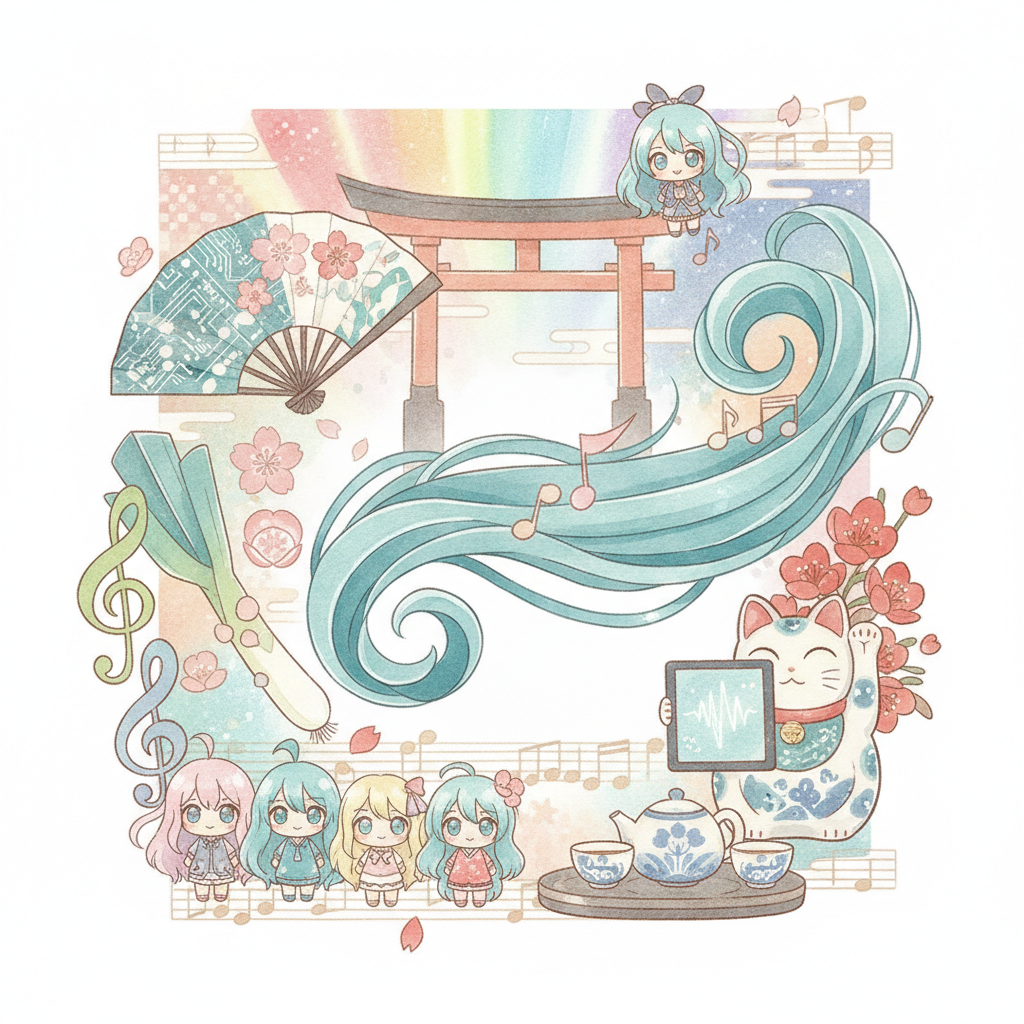
Hatsune Miku was released on August 31, 2007, by Crypton Future Media, a company based in Sapporo, Japan. She was a product in the VOCALOID 2 lineup — software that lets musicians synthesize a singing voice by typing in lyrics and melody. Her voice was provided by voice actress Saki Fujita. Even the name is meaningful: “Hatsune” translates roughly as “first sound” and “Miku” carries connotations of “future.” The character design — turquoise-green twin tails, black miniskirt, knee-high socks — was created by an illustrator known as iXima (also credited as KEI), and that silhouette is now instantly recognizable worldwide.
The first print run sold out almost immediately, which was genuinely unusual for a niche audio software product. What nobody quite predicted was what happened next: users on the Japanese video platform Niconico began uploading original songs composed with the software, and within months a self-sustaining creative explosion was underway. Early viral hits multiplied, and the community of “Vocaloid producers” (Voca-P, or Boca-P in Japanese) grew into a full subculture. The cultural reach of that scene is hard to overstate — artists like Yonezu Kenshi and Ayase (the composer behind YOASOBI) got their start producing Miku tracks. By 2009 Crypton was staging 3D holographic-style live concerts. By 2012, Miku was performing her first North American live show at Anime Expo in Los Angeles. By the 2020s, she had appeared in campaigns for Google, Toyota, BMW, and ASUS, among others.
A key reason Miku’s fandom feels different from a typical anime franchise is the license policy. Crypton adopted a comparatively open stance toward fan creation — the Piapro License — allowing secondary works to proliferate freely. There is no single manga or anime series that “owns” Miku. She belongs to whoever makes something with her, which is why her fanbase formed around a shared creative spirit rather than a specific story. That collective ownership feeling has kept the community unusually loyal and active across nearly two decades.
What Is Actually Out There to Collect
The Miku merchandise ecosystem is large, so it helps to know the main categories and who makes what.
Scale figures are the prestige tier of Miku collecting. Good Smile Company (GSC) is the dominant name — they produce both Nendoroid figures (small, chibi-style, and poseable) and high-end scale figures in 1/4, 1/6, 1/7, and 1/8 ratios. As a general rule, the larger the scale, the higher the price and the higher the collector interest. FREEing specializes in large-format figures, including their popular 1/4-scale bunny-style releases, which sit firmly in the premium price bracket. Max Factory is respected for highly detailed sculpts and also produces the figma line, which are articulated action figures with swappable parts. SEGA produces prize figures — the kind originally distributed through arcade crane machines in Japan — which are more accessible in price but can become scarce once the arcade run ends.
Plush and soft goods include SEGA’s “Fuwa Puchi” series, available in standard sizes up to oversized versions reaching 50 centimeters. Collaboration merchandise spans gaming hardware (ASUS ROG laptops and peripherals with Miku branding, specialty mousepads) to event-exclusive goods sold only at the annual Magical Mirai concerts — Crypton’s flagship live event held each year in Japan. Regional variants like Sakura Miku (spring cherry-blossom theme), Yuki Miku (snow theme, originally Hokkaido-exclusive, now with broader releases), and the long-running Racing Miku series (tied to the GSC motorsport sponsorship project, with a new design each year from 2011 onward) give collectors entire sub-series to chase.
Why Genuine Miku Collectibles Command Real Money
This is the core question, so let’s walk through the factors that actually move prices — and the traps a new buyer needs to avoid.
Scarcity is the foundation of value. Magical Mirai venue-exclusive items are produced in limited quantities and are never restocked after the event ends. Arcade prize figures are available only while the machines are stocked — once that window closes, secondary market prices climb. Collaboration products like ASUS Miku Edition hardware are manufactured in fixed runs. Early figures from the 2008–2012 period, when the VOCALOID 2 era was at its height, are now out of production and genuinely hard to find in collectible condition.
Scale matters, and so does brand. A 1/4-scale figure from Good Smile Company or FREEing represents many more hours of sculpting, more complex engineering, and higher-grade materials than a standard prize figure. The market reflects this: 1/4-scale pieces regularly reach 40,000 to 80,000 yen (and sometimes beyond), while a standard Nendoroid might sit in the 3,000–8,000 yen range. GSC and FREEing are consistently the names that command the highest collector premiums.
Condition is not a small detail — it is a price multiplier. “NIB” (New In Box, meaning factory-sealed and untouched) can represent a dramatic premium over an opened or assembled figure, even if the figure itself is in perfect physical shape. Complete accessories — bases, display stands, alternate face plates, certificates of authenticity — all contribute to value. A figure missing its original stand or box is a different item from a collector standpoint, and priced accordingly.
Know the fakes. Unofficial, non-licensed figures — often manufactured in China and sold through gray-market channels — are a real problem in this hobby, and some do find their way onto eBay listings. The warning signs: packaging with blurry printing or color registration issues; absence of the manufacturer’s official holographic authentication seal (GSC, SEGA, and other major makers use these); soft or imprecise paint on the face; lightweight feel compared to a genuine PVC figure; and a price that sits at 50% or less of current market value for that item. Before you buy, cross-reference the figure against the official product page or the community database at MyFigureCollection (myfigurecollection.net), which catalogs nearly every legitimate release. For the Racing Miku line specifically, confirm the year of the release, since each annual edition has a different design and they are not interchangeable.
Seasonal and character variants carry their own collector logic. Collectors who focus on a specific sub-series — every Racing Miku year, for instance, or every Yuki Miku edition — tend to create sustained demand for older releases they are missing. Lot sales (bundles of multiple figures or goods at once) are also a recognized segment of the market, particularly for newer fans who want to build a collection quickly. The overall result is a market that rewards both patience and knowledge: understanding what you are looking at separates a bargain from a very expensive mistake.
Where to Find Authentic Examples
Sourcing genuine Miku merchandise from Japan is the most reliable way to avoid the counterfeit risk entirely. Items shipped directly from within Japan come with the full context of a domestic purchase — original packaging, correct authentication markings, and a seller with verifiable local knowledge of what they are handling. If you want to explore what is currently available, you can browse a curated selection at our eBay store, where we ship authentic Japanese collectibles worldwide. Whether you are picking up your first Nendoroid or tracking down a specific limited-edition piece, knowing what you are looking at — and where it came from — is always the best place to start.
Find Hatsune Miku in Our Store
If this guide caught your interest, here are a few Hatsune Miku pieces currently available in our shop. Each image links straight to the eBay listing.


Browse the full selection in our eBay store.