Picture a small white cat face — no mouth, a tiny nose, a red bow on the left ear, and an expression you get to fill in yourself. That is Hello Kitty, and in fifty years she has gone from a doodle on a Japanese coin purse to one of the most licensed character brands on earth. Created by Sanrio in 1974 and officially named Kitty White, she is imagined as a cheerful girl — not a cat — born in suburban London. Today her image appears on goods in more than 80 countries, and the collectible side of the market runs from affordable everyday stationery to Fender guitar effect pedals worth well over a thousand dollars, all under the same iconic red bow.
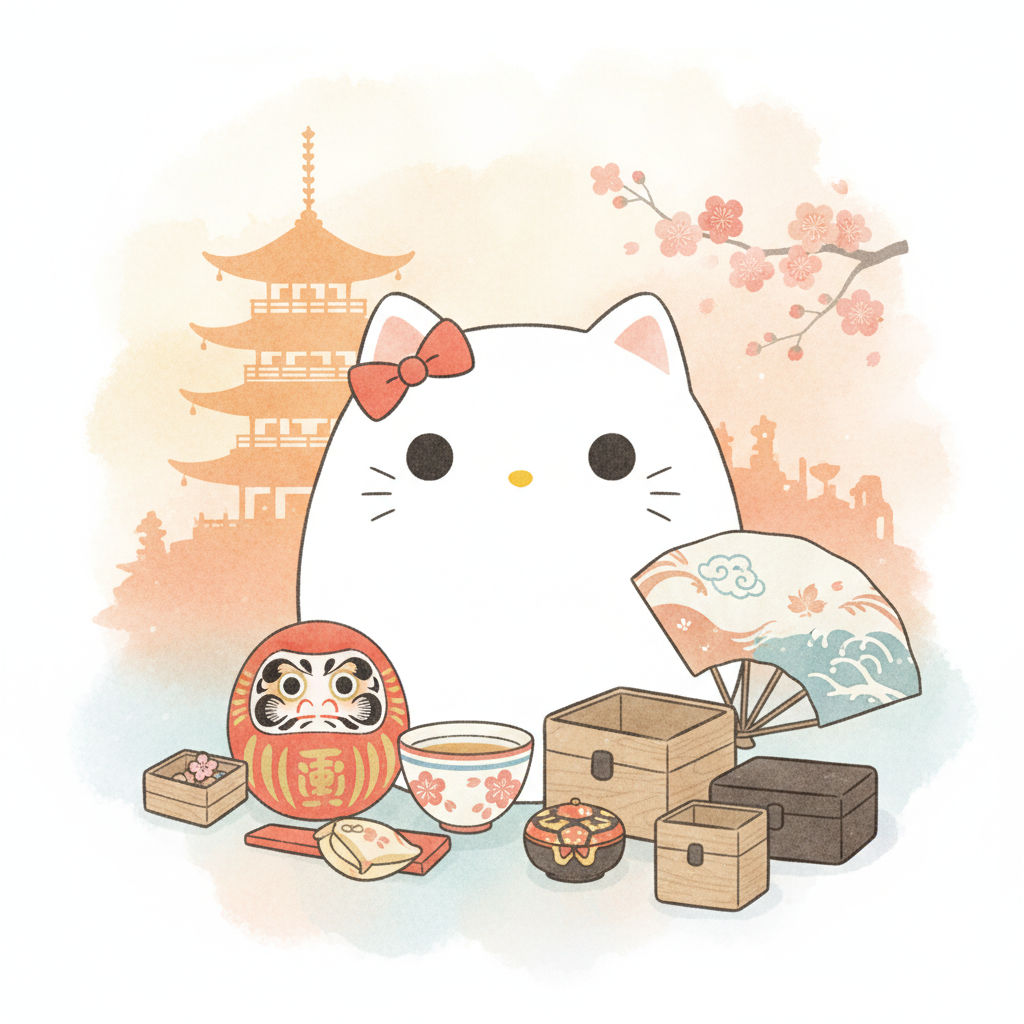
A Half-Century of Kawaii: Origins, History, and What She Means in Japan
Hello Kitty was designed by Yuko Shimizu and first appeared in 1974, printed on a small vinyl coin purse. Sanrio added her to their official product catalog in 1975, and through the late 1970s and 1980s she spread across stationery, plush toys, and kitchenware aimed at young Japanese girls — riding a boom in consumer goods that Japan’s bubble economy was producing. By the 1990s, something unexpected had happened: adult women had adopted the character too, and “adults who carry Kitty” became a recognized cultural fact in Japan. Simultaneously, Hello Kitty exploded across Hong Kong, Taiwan, and Southeast Asia. The 1999 McDonald’s Happy Meal toy collaboration in Hong Kong is often credited as the spark that turned Hello Kitty into a global collector phenomenon — people lined up for hours, and secondary market prices climbed immediately. The 2000s brought a serious push into North America, helped along by celebrity fans like Mariah Carey. Then the 2010s arrived with streetwear collabs — BAPE, Levi’s, Vans — that brought the character to an entirely new audience through fashion rather than nostalgia. Hello Kitty turned 50 in 2024, and anniversary releases are already drawing serious collector attention.
In Japan, Hello Kitty is the defining symbol of kawaii — the cultural aesthetic that treats cuteness, innocence, and approachability as genuine values rather than childish ones. For anyone who grew up in Japan in the 1980s or 1990s, a Kitty pencil case or eraser was simply part of childhood, and the nostalgia that comes with it runs deep. Sanrio itself has noted that the mouthless design is intentional: without a fixed expression, the person looking at her provides the emotion. That unusually open design goes a long way toward explaining why Hello Kitty resonates across so many cultures and age groups — she reflects back whatever feeling the viewer brings.
The Main Series, Collabs, and Formats Every New Collector Should Recognize
The Hello Kitty collectible world is broader than most newcomers expect. Sanrio releases a basic line every year — updated stationery, plush, tableware — which is affordable and widely available globally. Far more interesting to collectors are the regional editions, known as gotochi kitty: items produced exclusively for specific Japanese prefectures or tourist destinations. There are more than 500 distinct gotochi varieties, and a piece tied to a hard-to-reach rural spot can be genuinely impossible to source outside Japan, which feeds directly into its price.
The collaboration catalog is a world of its own. The 1999 McDonald’s Hong Kong Happy Meal toys remain among the most coveted Hello Kitty collectibles anywhere — a complete, unused set commands serious money. Electronics collaborations with Sony (PSP, Walkman) and Casio attract a tech-collector crossover audience that shops alongside traditional Sanrio fans. The BAPE (A Bathing Ape) streetwear pieces operate almost entirely within the sneaker-and-hype market, where buyers may have no particular interest in Sanrio at all — the draw is the BAPE brand. The Fender guitar effect pedal collaboration is a useful reminder that Hello Kitty’s licensing reach is genuinely unusual: it pulls in music collectors who would never otherwise browse a character goods shop. Re-Ment, the Japanese miniature figure company, has produced several Hello Kitty blind-box sets; a complete, sealed set of eight figures is consistently in demand among figure collectors worldwide. And genuine vintage pieces from the 1970s and early 1980s look visibly different from modern Kitty — the face proportions and eye shape evolved over time — making early items prized for both their rarity and their design-history value.
Why Collectors Pay Real Money — and How to Buy with Confidence
On eBay, authentic Hello Kitty collectibles in the $179–$199 range represent a realistic entry point for quality pieces, with rarer examples climbing well above that. Three factors drive price more than anything else: rarity, condition, and completeness.
Rarity comes from several distinct sources. Regional and event exclusives — gotochi items and pieces sold only at Universal Studios Japan or similar venues — simply never reach international retail shelves, so overseas buyers must seek them out. “From Japan” in a listing is a genuine scarcity signal, not just marketing: Japanese domestic exclusives are why international collectors come to eBay in the first place. Discontinued collabs grow rarer with every passing year because the original stock is finite. The 1999 McDonald’s Hong Kong set and the Hello Kitty PSP bundle are prime examples — they were promotional items, not designed to last, and the ones that did survive in good shape are genuinely uncommon. True vintage pieces from the 1970s and 1980s are rare for the most straightforward reason: most were used up or discarded.
Condition matters enormously — more so here than in many other collecting categories. Mint-in-box, unopened Hello Kitty items regularly sell for two to five times the price of a used equivalent. For plush toys, check for eye fading or peeling, uneven stuffing, and seam wear. Figures and Re-Ment sets should be free of yellowing plastic and any musty smell. Electronics collaborations should come with an explicit seller confirmation that the item is tested and working — look for that language before committing. Paper and vinyl goods should show no discoloration, creasing, or label peel. Original tags, boxes, and any included paperwork all add meaningful value, so their absence should be reflected in the price you pay.
Completeness is non-negotiable for sets. A Re-Ment miniature set missing even one figure drops sharply in value, and the same logic applies to any multi-part collab release. Always confirm piece counts with the seller upfront.
On authenticity: every genuine Sanrio product carries the copyright mark — ©SANRIO Co.,Ltd. — on its tag, stamp, or printed label. Unlicensed imitations are common, and the telltale signs are slightly off fonts, thinner or cheaper fabric, and uneven stitching. On older pieces, note that the copyright format itself changed across decades, so differences in tag wording are a legitimate dating clue rather than automatic evidence of a fake. When in doubt, buy from sellers with strong, established feedback records — and ideally from Japanese specialist dealers who handle these items regularly and know what authentic condition looks like.
Finding Authentic Pieces
Hello Kitty collecting rewards a little knowledge — and now you have the essentials. Once you understand what separates a regional gotochi piece from a basic-line item, or why a sealed Re-Ment full set commands a premium over a loose one, the listings start to make real sense. If you want to explore authentic items shipped directly from Japan with detailed condition notes, you are welcome to browse our eBay store, where we source and list genuine Japanese collectibles for buyers worldwide.
Find Hello Kitty in Our Store
If this guide caught your interest, here are a few Hello Kitty pieces currently available in our shop. Each image links straight to the eBay listing.


Browse the full selection in our eBay store.