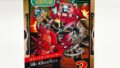
Amada Pokemon Battle Sticker No.290 — Dewgong, 1997

A Sticker with Stats: What This Amada Card Actually Is
This is a rectangular flat sticker from Amada’s Pokemon Battle Sticker series, produced in 1997. It looks simple at first — illustrated art on a white-bordered card — but the printed data tells a more complete story. The sticker carries a level (LV.47), dual type icons for Water and Ice, numerical stats, and a weakness notation (Fire ×2). The number “290” is Amada’s own catalog number within the series, not Dewgong’s Pokedex entry, which is No.87. That game-data format — turning a flat sticker into a miniature battle reference — is the defining feature of Amada’s Pokemon sticker line and sets it apart from purely decorative merchandise of the same period.
Dewgong and the Original 151, at the Height of Pokemon’s First Boom
Dewgong is National Pokedex No.87, a dual Water- and Ice-type Pokemon modeled on the dugong, a large marine mammal. White body, flipper limbs, rounded head — the design translates its real-world inspiration directly. It was among the original 151 Pokemon introduced in Pokemon Red and Green on the Game Boy in February 1996 in Japan, and it went on to appear in the anime adaptation that began airing on TV Tokyo in April 1997.
That 1997 date is significant. This sticker was made during the exact window when the game’s first-anniversary momentum collided with the anime’s launch — the period that turned Pokemon from a popular game into a broader cultural phenomenon. Licensed merchandise from Amada and other manufacturers reached convenience stores, stationery shops, and candy stores across Japan throughout 1997 and 1998. The copyright line on this sticker reads in its Japanese form, “Pocket Monsters,” a detail that marks it as an early product from before the international “Pokemon” branding fully standardized. Dewgong also appeared in the anime alongside Water-type Gym Leader Misty, adding to its recognition among fans of the original series.
Amada, Japan’s Sticker Culture, and the Collector Context
Amada was one of Japan’s most active producers of anime-licensed stickers and cards through the 1980s and 1990s, with lines tied to Dragon Ball, Sailor Moon, Slam Dunk, and many others. Their Pokemon output was substantial, spanning hundreds of the original species across multiple series. The battle-stat format on this sticker — consistent attack and defense values alongside type-matchup multipliers — was a uniform design choice across the Amada Pokemon line, which collector communities recognize as a distinct numbered series.
That format belongs to a longer tradition. Japan’s sticker-collecting culture took its modern shape in the late 1980s when Lotte’s Bikkuri Man stickers became a national craze, establishing the habit of collecting, trading, and playing with small illustrated cards from candy and food products. Amada’s Pokemon stickers sit directly in that lineage: objects built for multiple uses at once. For international collectors, the Japanese-market format — Japanese character name, domestic copyright text, Amada’s internal numbering — is a marker of origin that distinguishes these stickers from anything produced for non-Japanese markets. The exact distribution method for this particular sticker, whether sold individually, in sheets, or packaged with a food product, is not confirmed from available records.

Shipped directly from Japan by a small shop
$7.86
Ships worldwide from Japan • Full photos and details on the listing