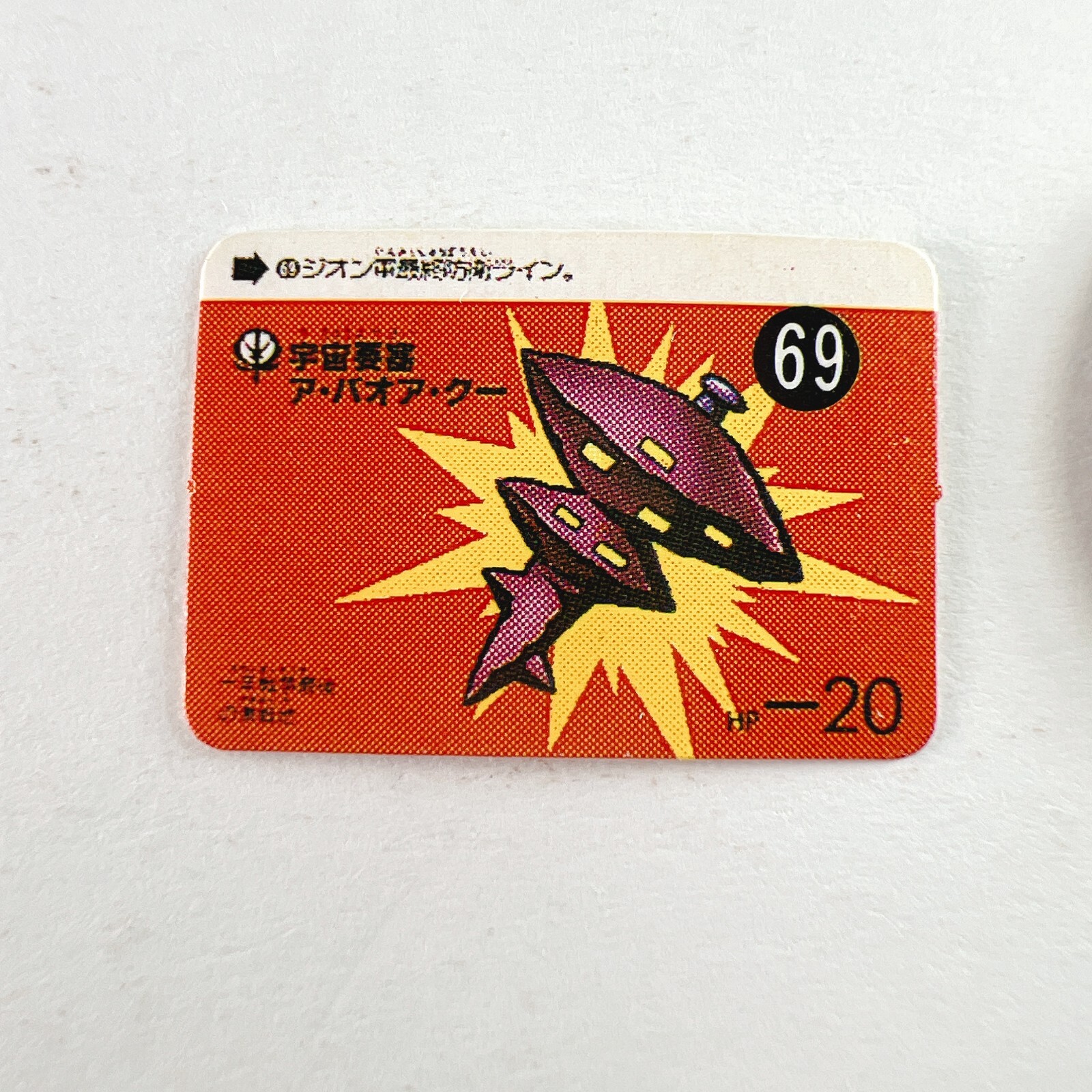
A Baoa Qu Mini Carddas Card from 1989 — Bandai's Early Gundam Trading Card Series

What This Card Is
This is a single card from Bandai’s Mini Carddas line, a compact-format variant of the Carddas trading card brand that launched in 1988. Card number 69, it features the space fortress A Baoa Qu — identified on the card itself as the “Zeon Final Defense Line” — and carries a game parameter of HP -20, indicating this series used light RPG-style stats alongside its artwork. Copyright notices on the card confirm it is an officially licensed product, bearing the marks of both Sotsu Agency (the Gundam rights management company) and Sunrise, the studio that produced the original anime. The listing title also notes a connection to Comic BonBon, the Kodansha monthly manga magazine that ran from 1981 to 2007 and frequently featured Gundam-related content — suggesting this card may have been distributed through the magazine’s reader promotions or similar campaigns, though the precise channel cannot be confirmed from available information.
The Story Behind A Baoa Qu and the One Year War
Mobile Suit Gundam, the 1979 Sunrise television series, is the foundation of the Universal Century timeline — a sprawling saga set in a future where humanity has colonized space and the rebellious Principality of Zeon wages war against the Earth Federation. A Baoa Qu is the asteroid fortress that Zeon designates as its last line of defense in that conflict, known as the One Year War (U.C. 0079). The Battle of A Baoa Qu forms the climax of the series finale — episode 43, broadcast in January 1980 — and effectively seals Zeon’s defeat. The fortress is described in the series as having two distinct sectors, a structural detail that matches the image on this card. What makes this card notable among Gundam collectibles is that it depicts not a mobile suit or a named pilot, but the fortress itself — a location that carries enormous narrative weight for anyone who has followed the story through to its conclusion.
Carddas Culture and Why 1989 Matters
Bandai launched the Carddas vending machine system in 1988, with Dragon Ball as its debut IP. The format was straightforward: insert a coin, receive one randomly dispensed card. At 20 yen per card, the combination of low cost and randomness drove extraordinary popularity among Japanese children throughout the late 1980s and into the 1990s. Gundam, already a massive franchise sustained by the Gunpla plastic model market and renewed by the 1988 theatrical release Char’s Counterattack, was a natural fit for the system. Cards from this earliest generation of Carddas — produced before digital printing became standard — carry visible halftone dot patterns from the offset printing process, a physical characteristic that sets them apart from later re-releases and modern reprints. These were sold exclusively through Japan’s domestic vending machine and toy distribution networks; no official international distribution existed. For collectors outside Japan, a 1989 Carddas card represents a piece of the original ecosystem, physically unchanged from when it first came out of a machine nearly four decades ago.


Price: $9.59 | View on eBay