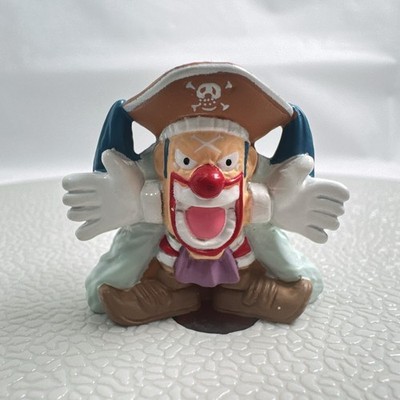
Bandai One Piece World 2 Shokugan Figure — Buggy the Clown (2002)

One Piece at the Height of Its Early Popularity
In 2002, One Piece was already a cultural force in Japan. Eiichiro Oda’s manga had been running in Weekly Shonen Jump since 1997, and the TV anime adaptation — which launched on Fuji TV in October 1999 — had been pulling in viewers for three years. Worldwide, the series’ cumulative print run was climbing rapidly, and the domestic merchandise market was expanding just as fast to keep up.
Bandai, Japan’s largest toy and character goods manufacturer, was one of the primary license holders for One Piece products during this period. Among its many product lines, the shokugan category was particularly active. The One Piece World series — a line of small, fully painted chibi-style figures sold as candy toys — was one of the most recognizable names in that category. This Buggy the Clown figure comes from One Piece World 2, the second installment in that series, released in 2002. The lineup for that installment is believed to have focused on early major characters from the series.
Buggy the Clown: One Piece’s Original Antagonist
Buggy appears in the manga as early as Chapter 9, making him one of the first significant antagonists Monkey D. Luffy encounters on his journey. He is the captain of the Buggy Pirates, a circus-themed crew, and his chaotic fighting style comes from the Chop-Chop Fruit — a Devil Fruit ability that lets him detach and freely control any part of his body.
His look is instantly recognizable: white face paint, a bulbous red nose, X-shaped marks on his cheeks, a tricorn hat bearing a skull emblem, and a striped shirt. The clown aesthetic runs through everything about him. Beyond the spectacle, Buggy carries genuine story weight — he once served on the same crew as Shanks, Luffy’s childhood hero, a detail that gives him unexpected depth for a character who also functions as comic relief. He returned repeatedly across the series, his standing within the story’s world growing considerably over time. By 2002, he was already a fan favorite from the East Blue Saga, the arc that introduced most of the core cast.
That combination of a distinctive visual identity, comedic energy, and genuine narrative longevity makes him a natural fit for merchandise. The chibi-style sculpt of this figure — compact proportions with exaggerated features — suits his theatrical personality well.
Japan’s Shokugan Tradition and the One Piece World Series
Shokugan — short for shokuhin gangu, or “food toy” — is a product category with roots in 1970s Japan. The format pairs a small toy with a piece of candy, typically ramune or gum, and sells them together as a single low-priced unit through convenience stores, small toy shops, and similar retail outlets. In English-speaking communities interested in Japanese pop culture, the category is sometimes called “candy toy figures.”
Through the late 1990s and into the 2000s, Bandai and other manufacturers raised the bar considerably, producing shokugan figures with careful paint applications and sculpts detailed enough to attract adult collectors alongside younger buyers. The One Piece World series sits in that moment: pre-painted, display-ready figures sold at accessible price points. Individual pieces were distributed in assorted multi-figure boxes, meaning specific characters like Buggy were not guaranteed in every purchase — a format that made particular figures harder to come by.
More than twenty years have passed since One Piece World 2 moved through Japan’s retail network. Items from this line represent an early chapter of Bandai’s long history with One Piece merchandise, predating many of the better-known product lines that followed. One Piece has since surpassed 500 million copies in print worldwide, as announced by Shueisha in 2022, and the fandom that grew up alongside these early figures remains global in scope.


Boxed and cushioned for the trip from Japan
$15.63
Ships internationally • More photos on the eBay listing