Juichimen Kannon Gold Figure — Kaiyodo Capsule Q Museum

Kaiyodo’s Capsule Q Museum and the Cultural Heritage Series
Kaiyodo, founded in 1964 and based in Osaka, is one of Japan’s most respected figure manufacturers — a company known internationally for the precision of its sculptural work. Within its broad lineup sits the Capsule Q Museum, a gashapon series dedicated not to anime or manga characters, but to cultural heritage: dinosaurs, wildlife, historical artifacts, and Buddhist sculpture rendered as high-detail miniatures. The “Q” in the name references the rounded shape of the capsule itself, and the series as a whole sits in a distinct category within Kaiyodo’s output, aimed at the museum-minded collector.
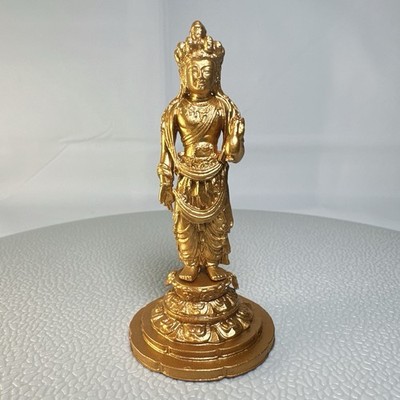
The company has produced multiple runs of Buddhist sculpture-themed figures under this banner, and this Juichimen Kannon piece appears to belong to that tradition. The “Gold Capsule” designation in the listing title likely refers to a special gold-color variant within the series, though the exact edition and release year cannot be confirmed from the available information. What is clear is the format: the figure stands on a lotus pedestal, cast in plastic or resin with a metallic gold finish — and it follows a very specific artistic tradition.
The Iconography of Juichimen Kannon in Japanese Buddhism
Juichimen Kannon — known in Sanskrit as Ekadaśamukha — is one of the principal manifestations of Kannon Bosatsu (Avalokiteshvara), the bodhisattva of compassion. The defining feature is the eleven faces: a main face at the front, surrounded by ten subsidiary faces arranged around the head, each expressing a different aspect — compassion, wrath, or enlightenment — depending on the Buddhist school and historical period. This arrangement carries a specific symbolic meaning: the many faces allow Kannon to look in all directions simultaneously, perceiving the suffering of beings throughout the universe without ever turning away.
The figure’s raised right hand follows the abhaya mudra, the classical gesture of fearlessness and protection; the left hand traditionally holds a lotus. This Kaiyodo figure, with its right arm raised above a multi-tiered lotus pedestal, adheres to that iconographic form. Worship of Juichimen Kannon flourished in Japan from the Nara period (8th century) onward, and the deity became especially central to the esoteric Buddhism of the Tendai and Shingon schools during the Heian period. Some of Japan’s most celebrated national treasures are Juichimen Kannon images — sculptures enshrined at Horyuji, Muroji, and Shorin-ji temples in Nara, among others. The gold finish on this figure deliberately echoes the gilded and gold-lacquered surfaces of those ancient originals.
Gashapon as a Medium for Serious Collecting
Japan’s gashapon culture dates to around 1965 and today operates across hundreds of thousands of vending machines nationwide. For most of its early history, the format was associated with simple novelties. That changed in the 1990s when manufacturers like Kaiyodo began treating the capsule as a legitimate medium for precise sculpture, turning what had been a children’s pastime into a collector’s market for adults.
The cultural-heritage segment of that market occupies a particularly thoughtful niche. Figures based on real temples, historical artifacts, and Buddhist iconography have been stocked in Japanese museum gift shops alongside academic publications. The subject connects directly to Japan’s artistic tradition rather than to any fictional franchise. For collectors outside Japan, Kaiyodo’s Buddhist figure lines rarely appear through ordinary retail channels — and their combination of sculptural accuracy, historical subject matter, and the specific context of Japanese capsule-vending culture gives them a character that sets them apart from most mass-market collectibles.


Boxed and cushioned for the trip from Japan
$16.09
International shipping available • Ask us anything before you buy