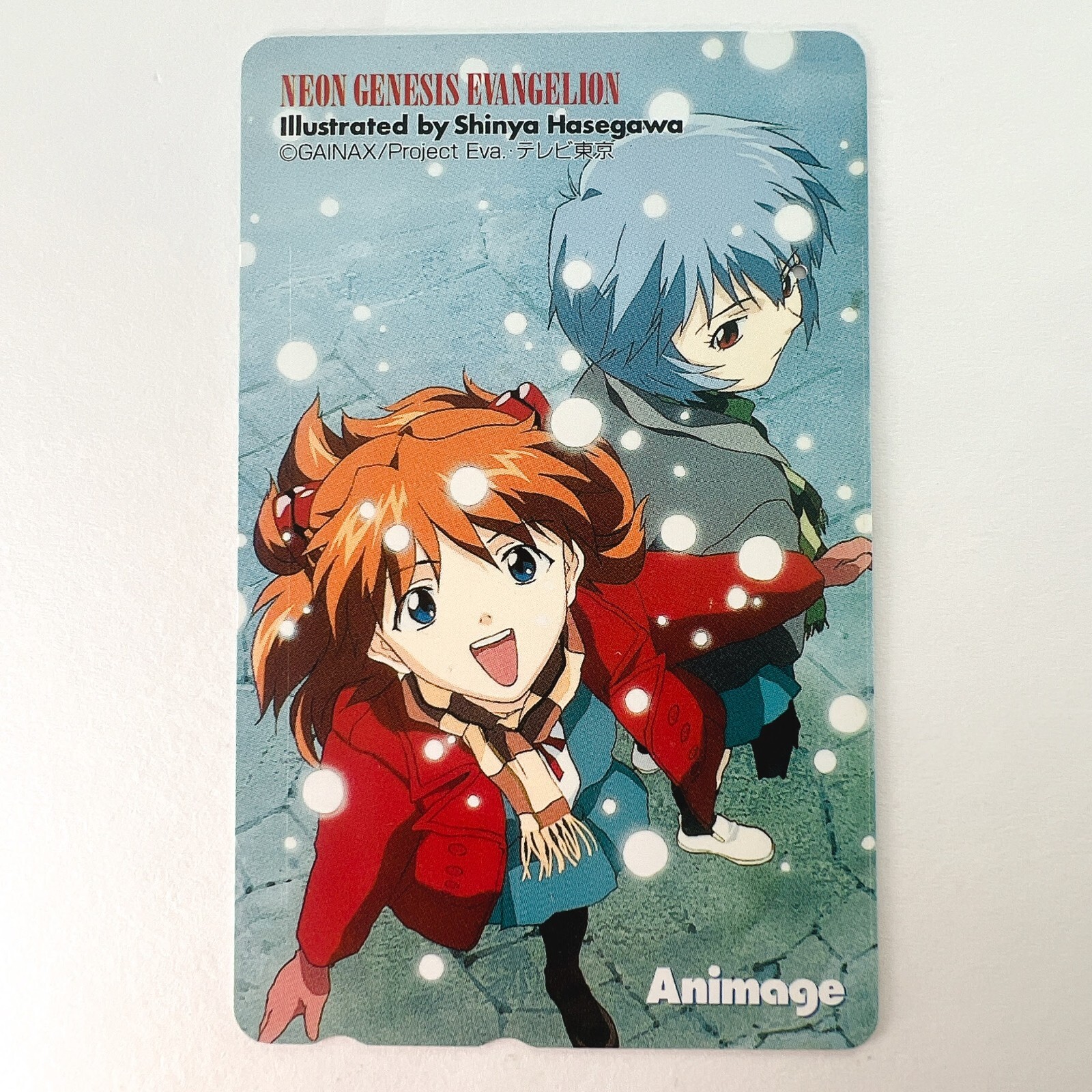
Evangelion Telephone Card with Asuka and Rei, Animage Limited

What a Japanese Telephone Card Actually Is
In Japan during the 1980s and 90s, public telephones were a fixture of daily life, and the prepaid magnetic cards used to operate them became a culture of their own. NTT — Japan’s national telephone company — introduced these telephone cards in 1982. About the size of a credit card and made from thin, rigid plastic, each card held a set number of call units. Insert it, make your call, remove it when done.
What turned telephone cards into collectibles was what got printed on them. Magazines, anime studios, and companies commissioned illustrated cards featuring characters and original artwork, and fans collected them alongside — or instead of — ever using them. Limited-edition and magazine-tied runs were understood from the beginning to be collector’s items as much as phone payment tools. By the mid-1990s, the illustrated anime telephone card was one of the most widely produced small collectibles in Japan.
This card carries the Animage Limited brand — the licensed merchandise line of Animage magazine. Published by Tokuma Shoten since 1978, Animage is one of Japan’s oldest anime publications, known historically for its coverage of major titles and its ties to filmmakers including Hayao Miyazaki. The Animage Limited line distributed goods to readers through channels such as magazine giveaways, supplements, and mail order, though the specific route for this particular card isn’t documented in available records. The card is listed as used, meaning its magnetic credit has been spent — a common status distinction for telephone cards that in no way affects their standing as illustrated collectibles.
Neon Genesis Evangelion and Its Two Central Pilots
Neon Genesis Evangelion aired on TV Tokyo from October 1995 through March 1996, produced by GAINAX under director Hideaki Anno. The series follows teenagers who pilot enormous bio-mechanical weapons called Evangelions to fight beings known as Angels. What set it apart from other mecha anime of its time was its psychological and philosophical depth — its characters carry trauma, crisis of identity, and a will to survive that the story examines as closely as its action sequences. The combination created a cultural conversation in Japan that outlasted the broadcast by decades. Related films came in 1997, and a new theatrical series ran from 2007 through 2021.
The card depicts the two characters most closely associated with the franchise internationally. Asuka Langley Soryu — pilot of Evangelion Unit 02, 14 years old, with reddish-orange hair and a fiercely competitive personality — appears here in a red winter jacket, smiling and looking upward. Rei Ayanami, pilot of Unit 00, is shown in a gray winter jacket, glancing back over her shoulder; her pale hair and red eyes mark her immediately, as does the quieter, more inward quality she projects. Both figures stand in a winter outdoor scene. Whether this composition references a moment from the series itself isn’t certain from available information — it appears most likely to be an original licensed illustration created for the card. The artwork is credited to Shinya Hasegawa, though further details about this artist’s background or their relationship to the production aren’t confirmed in existing records.
A Product Rooted in the Original Broadcast Era
Based on the Animage Limited branding and the timeline of the series, this card was almost certainly produced in the mid-1990s — during or immediately after the original broadcast window when Evangelion first became a social phenomenon in Japan. It is an original licensed product from that period, not a reprint or modern reproduction. The copyright credit belongs to GAINAX and Project Eva with TV Tokyo, as was standard for merchandise authorized during that era.
Telephone cards as a format never spread outside Japan in the same way, which gives this object an additional dimension for international collectors: it represents a product type native to Japanese daily life during a specific decade, issued under a respected anime publication’s brand, and tied to a franchise that has since reached audiences across North America, Europe, and Asia. Asuka and Rei are among the most recognized characters in global anime fandom, and items originating from the original broadcast period carry a historical specificity that later merchandise does not.


Comes straight from Japan — no middleman
$24.37
Ships internationally • More photos on the eBay listing