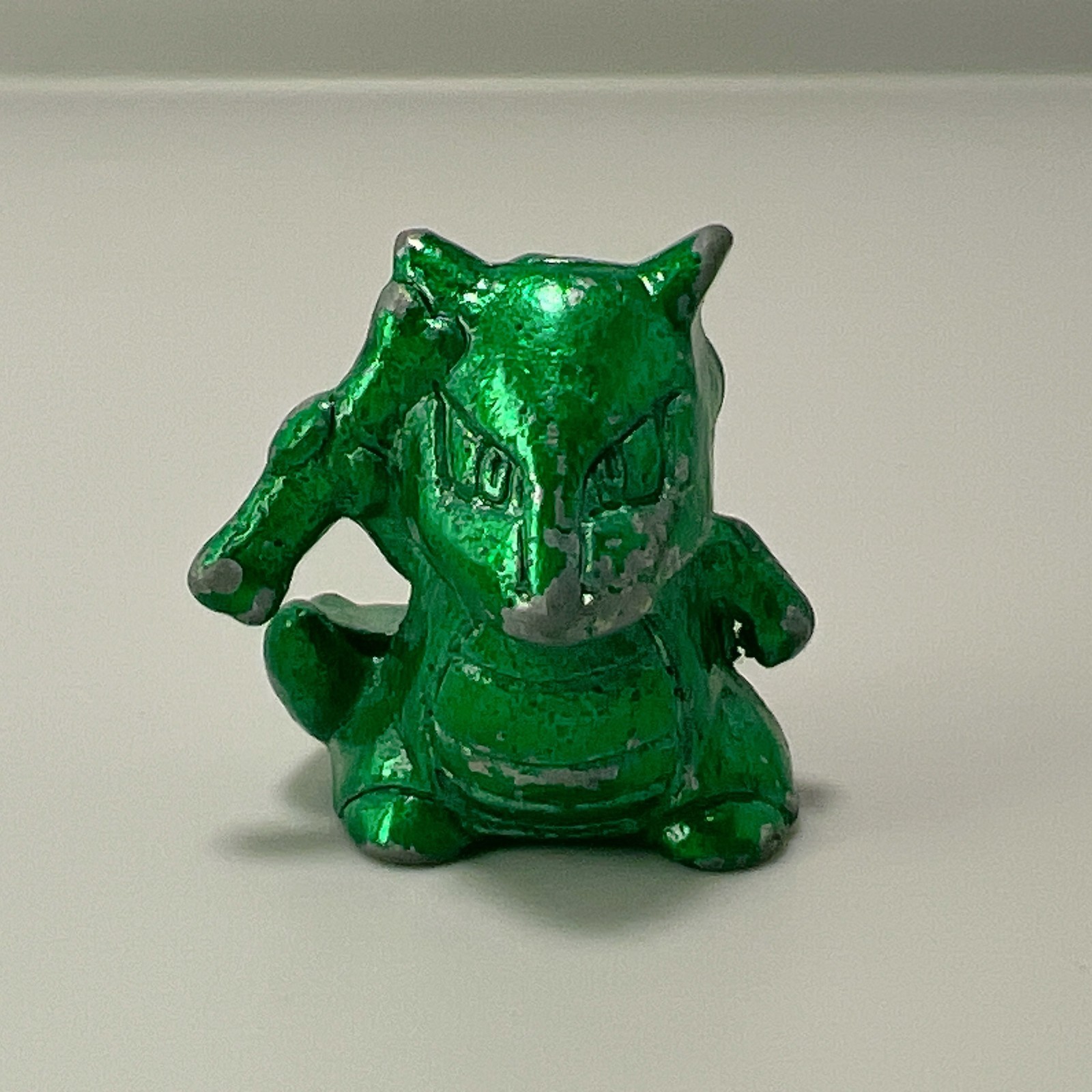
Bandai Pokemon Metal Collection Marowak, Green Ver.

A Die-Cast Pokemon Figure From the Peak of the Boom
This figure belongs to Bandai’s Pokemon Metal Collection line — a series of small, die-cast metallic figures produced during what is estimated to be the late 1990s to early 2000s, at the height of the global Pokemon wave. Unlike the soft vinyl and PVC figures that flooded Japanese shelves during those years, Metal Collection pieces were cast in zinc alloy or similar metal and finished with a colored metallic paint. The result is noticeably heavier and more solid in hand than the plastic contemporaries filling the same shelves at the time.
The Green Ver. designation identifies this as one of several color variants produced from the same mold — Silver and Gold versions being among those known to have existed. Releasing the same figure in multiple paint finishes was a deliberate approach in Japan’s shokugan (food toy) and capsule toy markets of this period: one mold, several colors, and the implicit challenge of collecting each. Where the green coat has worn through, the silver-gray base metal shows beneath — a natural result of painted metal aging over more than 25 years.
Marowak and the Story Players Never Forgot
Marowak is National Pokedex number 105, a Ground-type from the first generation that evolves from Cubone at level 28. The character is defined visually by the white bone mask over its skull and the bone club it carries as a weapon. For players who worked through Pokemon Red and Green on the original Game Boy, Marowak carries a narrative weight beyond its typing. In the Pokemon Tower at Lavender Town, the player encounters what is later revealed to be the spirit of a Cubone’s mother — a Marowak killed by Team Rocket. It is one of the more unexpectedly somber moments in a game aimed at children, and it stayed with an entire generation of players worldwide.
This figure represents the original Kanto design. When Pokemon Sun and Moon introduced the Alolan form of the character — a Fire and Ghost dual-type with a very different appearance — it was 2016, well after this line would have been produced. The character depicted here is the version players first encountered in 1996.
Japan’s Color Variant Collecting Culture
Bandai was among the most active official Pokemon licensees during the late 1990s, producing figures across a range of formats including soft vinyl sets and finger puppets. The Metal Collection line stood apart from its contemporaries by material alone — the weight and texture of cast metal setting it apart from everything else on the market. These were products designed for the Japanese domestic market, not goods intended for export, which is part of why figures from this period are less commonly encountered outside Japan. The Green Ver. is one piece of a color set built on the collecting logic of its era: track down the variant, complete the lineup.


Boxed and cushioned for the trip from Japan
$18.85
Ships worldwide from Japan • Full photos and details on the listing