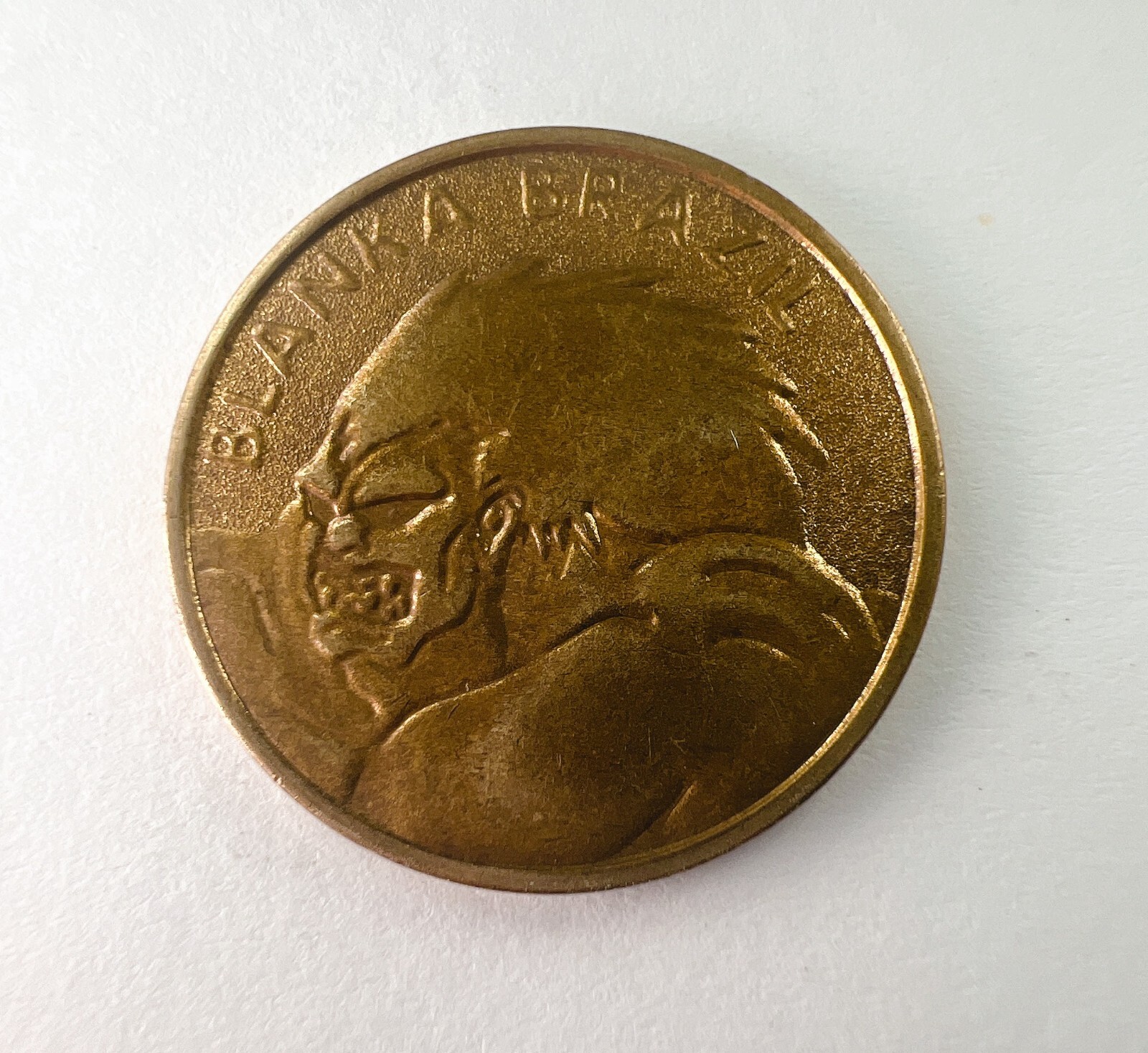
Blanka Metal Token, Street Fighter II — 1992, Capcom Japan

A Copper-Toned Coin from Japan’s Metal Collectible Tradition
This is a round, coin-shaped token cast in what appears to be copper or a copper-alloy material, giving it a warm bronze tone. Blanka’s bust is rendered in high relief on the face, with the inscription “BLANKA BRAZIL” pressed along the upper rim. It was produced in Japan in 1992 under the Capcom name, placing it squarely in the first generation of Street Fighter II licensed goods.
Metal tokens like this occupy a specific corner of Japanese collectible history. They are not food toys — the snack-packaged premiums that gave the world the term “shokugan” — nor are they gashapon capsule figures. The format sits closer to a commemorative medal or a coin piece: a standalone metal object intended to be kept or displayed. In Japan during the 1980s and 1990s, this kind of metal craft collectible had a modest but distinct market. Because the fabrication costs for metal goods ran higher than for plastic, production volumes tended to be smaller than for equivalent plastic items, though the exact details for this particular token are not confirmed.
The listing identifies the item as “Capcom Japan,” which indicates it was either produced directly by Capcom or manufactured by a licensed maker in Japan under Capcom authorization. The specific manufacturer is not confirmed from the available information.
Blanka, His Origin, and Why the Inscription Matters
Street Fighter II: The World Warrior launched in Japanese arcades in 1991 and quickly changed how people thought about competitive video games. The game offered eight distinct fighters, each tied to a specific country and fighting style. Blanka is Brazilian — orphaned by a plane crash over the Amazon and raised feral in the jungle. That backstory produced a character unlike anyone else in the original roster: green-skinned, fanged, and capable of channeling electricity through his body.
The token’s “BRAZIL” inscription is a direct reference to that in-game origin, and the high-relief portrait is designed to capture what makes Blanka visually distinctive: the wild expression, the shaggy silhouette, the raw physicality. His two signature techniques — the Electric Thunder and the Rolling Attack — gave him a fighting identity rooted entirely in that feral background. He was not always the most dominant character in skilled play, but his genuinely unusual design made him memorable across cultures. That recognition has persisted through every major Street Fighter release since, including Street Fighter 6 in 2023.
1992 and the Moment This Token Was Made
The year 1992 was a pivotal one for the franchise. Street Fighter II had been in arcades since 1991, but 1992 is when it became a household name beyond the arcade: the Super Famicom version launched in Japan on June 21 of that year and became a genuine cultural event. Capcom also released Champion Edition and Hyper Fighting in arcades the same year, sustaining the game’s profile across multiple formats simultaneously. Licensed merchandise expanded rapidly alongside all of this activity.
For collectors who focus on early Street Fighter goods, the 1991–1993 period is typically understood as the original production window — items made when the franchise was new, before sequels and reboots reshaped the brand’s identity. A metal token from 1992, manufactured in Japan and stamped with the character’s origin country, is a dateable object from that specific moment in gaming history. The physical durability of cast metal also means the high-relief portrait has held its detail across more than three decades in a way that paper or plastic goods of the same era often have not.


Comes straight from Japan — no middleman
$18.85
Ships internationally • More photos on the eBay listing