Queen Alice Mascot Figure From the Country Tea Party Series

Carroll’s Chess Queen in Chibi Form
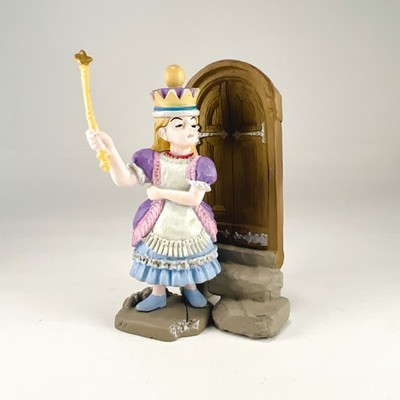
This is a painted, ready-to-display miniature figure from a Japanese toy series called Country Tea Party. It depicts Queen Alice — a concept drawn from Lewis Carroll’s 1871 sequel Through the Looking-Glass, in which Alice travels through a chess-themed mirror world and ultimately becomes a queen. The “1” in the product name signals either the first entry in the series or the first character in a numbered set, a common format for Japanese mascot releases.
The sculpt follows the chibi style: compressed proportions, oversized head, and fine detail carried through the paintwork. The figure wears a layered purple dress with a white apron and blue frilled skirt, carries a gold star-tipped scepter, and wears a multi-tiered crown decorated with gold spheres. The expression is stern and composed — the “cool” archetype rather than the wide-eyed Alice of the storybooks. The sculpted base depicts grey rockwork with a small arched wooden door and two steps, evoking the tiny locked door from the very opening of Alice’s Adventures in Wonderland and grounding this regal figure in that foundational scene.
The manufacturer behind the Country Tea Party line and the original distribution format — capsule toy, food toy, prize figure, or retail blister — are not confirmed from available information.
Alice and Japan’s Character Goods Tradition
Lewis Carroll’s Alice stories have been public domain for well over a century, and Japanese creators have made extensive use of that freedom. Unlike in much of the Western market, where Disney’s 1951 animated film defines the character’s visual identity, Japan developed its own interpretive tradition around Alice — threading her into kawaii fashion, gothic-lolita aesthetics, fantasy manga, and otome games across decades. The purple and blue palette here, distinct from the familiar all-blue pinafore, reflects that independent approach.
The Country Tea Party series name evokes the Mad Hatter’s tea party from Carroll’s novel, with “Country” suggesting a rustic or pastoral visual theme, though the exact concept behind the line remains uncertain. The mascot figure format itself is a fixture of Japanese retail: small, painted, collectible, and distributed through capsule machines, candy-toy packages, UFO catcher programs, and blister-card displays.
What Draws Collectors to This Interpretation
For Alice in Wonderland collectors, the Queen Alice interpretation offers something distinct from the far more common blue-dress depiction. Crown, scepter, and a composed expression mark her as sovereign — the character at the end of her journey rather than the beginning — while the arched door on the base ties the piece back to the story’s most recognizable single image. That layering of references, drawn from both Carroll books, gives the figure a reading that goes beyond surface-level character likeness.
The chibi aesthetic is itself a draw for collectors interested in Japanese character goods as a design tradition separate from Western realist figure sculpting. And because this figure appears to be part of a numbered series, it naturally invites the question of what other designs complete the set.


Boxed and cushioned for the trip from Japan
$14.07
Ships worldwide from Japan • Full photos and details on the listing