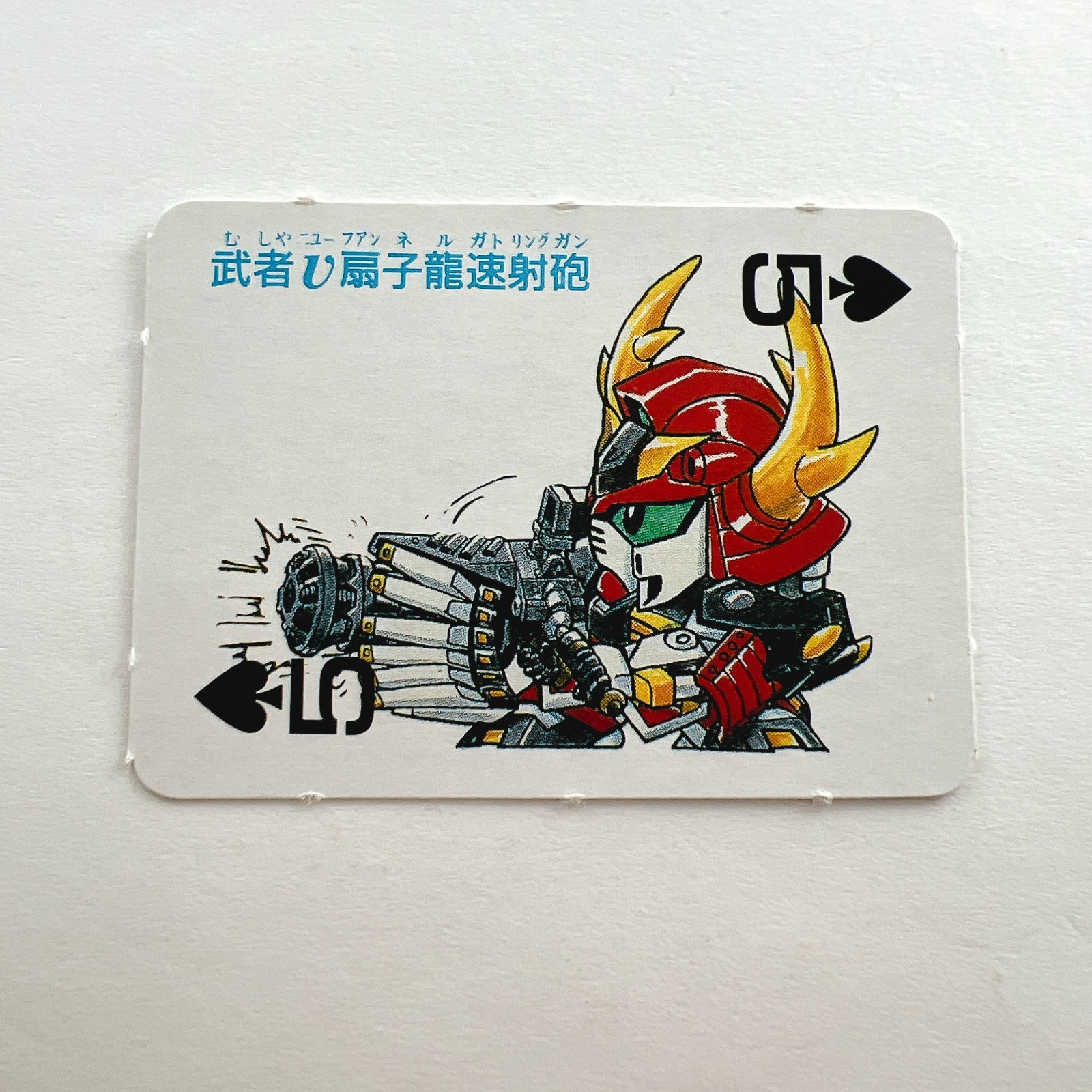
Musha Gundam Rapid-Fire Cannon Playing Card, Comic BomBom 1990

A Playing Card From the Peak of Japan’s SD Gundam Boom
This is the 5 of Spades from a playing card deck connected to Comic BomBom, the Kodansha boys’ manga monthly that served as the primary media hub for Bandai’s SD Gundam toy line in the late 1980s and early 1990s. The card carries full-color artwork of a Musha Gundam character whose name, transliterated in the listing as “Musha U Senshiryu,” combines elements meaning fan, dragon, and rapid-fire cannon — the elaborate, poetic naming style typical of the line. One character in the name is uncertain from available sources; it may involve a kanji for fire or a related element. Perforated cut marks along the card’s edge indicate it was part of a bound insert or supplement sheet, though whether it was a magazine supplement or a separately sold item is not confirmed.
Musha Gundam, BB Senshi, and Japan’s Magazine Supplement Culture
SD Gundam — SD for Super Deformed — originated in 1985 as a Bandai gashapon line reimagining the giant robots of Mobile Suit Gundam with exaggerated chibi proportions. The Musha Gundam sub-series, which became part of the BB Senshi plastic model range from 1988, applied a feudal samurai aesthetic on top: lacquered armor, ornate helmets, and bladed or ceremonial weapons merged with the SD body type to produce something without a direct equivalent in robot design at the time.
Comic BomBom ran from 1981 to 2007 and was deeply intertwined with Bandai’s toy output during its peak years — serializing related manga, covering new kit releases, and distributing collectible supplements to readers. Playing card sets in standard 52-card format, with each card featuring a different character, were a common format for magazine tie-ins during this era. By 1990, BB Senshi was releasing new kits monthly and the broader SD Gundam franchise was at its cultural and commercial height. When Comic BomBom ceased publication in 2007, everything it produced became definitively out of print.
Mecha Meets Samurai: The Cross-Cultural Appeal of Musha Gundam
Musha Gundam merchandise from this period was produced almost exclusively for the Japanese domestic market. Magazine supplement tie-ins and paper collectibles from the line were not part of the SD Gundam products that reached North America or Europe through official channels, which means items like this card circulated only within Japan at the time of release.
The visual logic of the Musha line is specific: it takes the internationally recognized Gundam mecha design language and routes it through the grammar of feudal Japanese warrior culture — armor, helmets, the bearing of a samurai fused with a mechanical SD frame. That synthesis sits outside anything Western robot design produced in the same period, and it has drawn collectors internationally who came to the line through import shops or online communities. As paper ephemera, a single playing card is also one of the more practical formats for a collector — flat, frameable, and easy to store or display without the space and care demands of a model kit or figure.


Comes straight from Japan — no middleman
$8.82
Ships internationally • More photos on the eBay listing