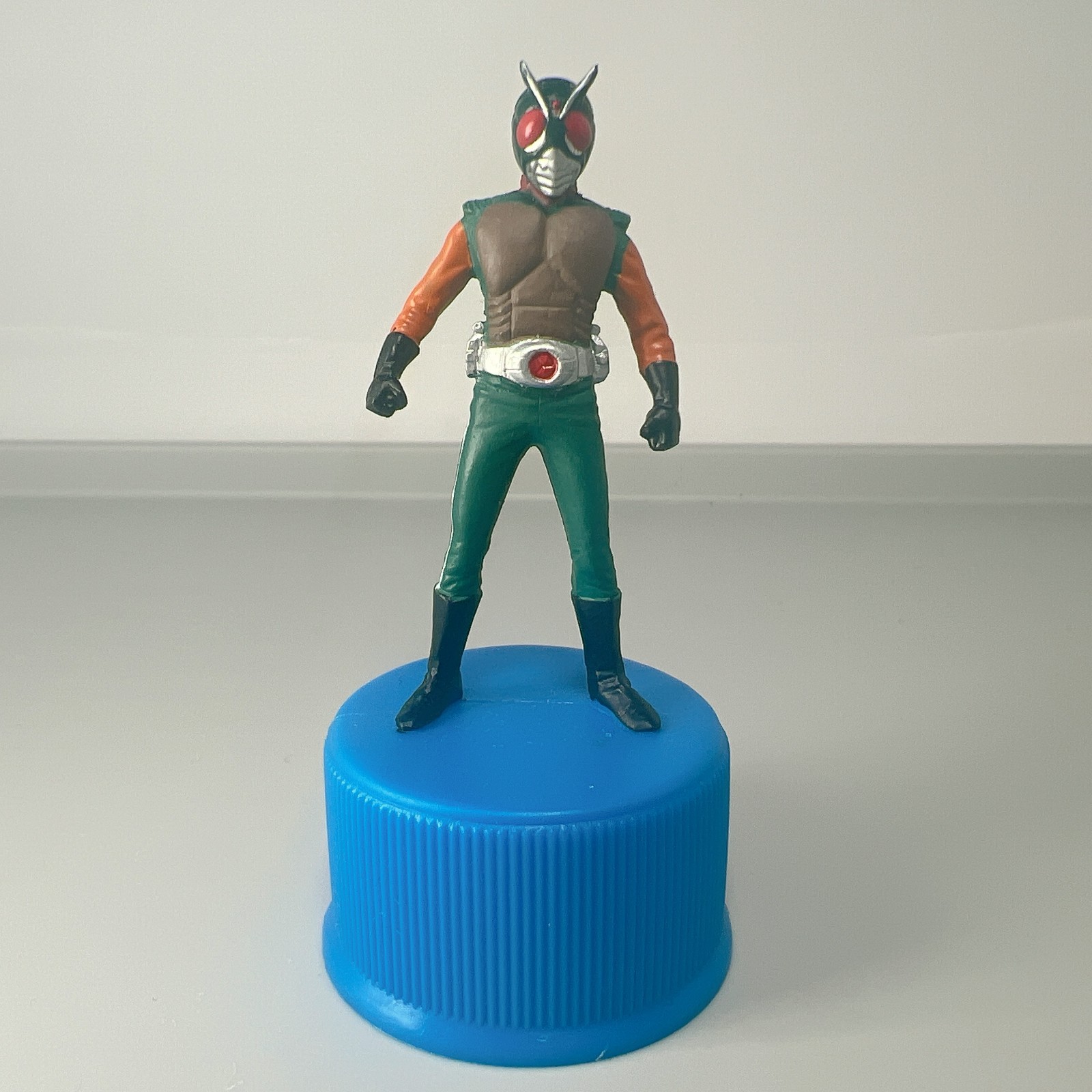
Skyrider Bottle Cap Figure — 2004 7-Eleven Japan Limited

The Eighth Showa Rider and His Flying Debut
Skyrider is the main hero of the 1979–1980 series officially titled Kamen Rider (Skyrider), the eighth entry in the long-running franchise created by Shotaro Ishinomori and produced by Toei. Like every Showa Rider before him, Skyrider — real name Hiroshi Tsukuba, played by then-newcomer Hiroaki Murakami — is a cyborg built around an insect motif. What sets him apart is straightforward: he can fly. Aerial combat and a flying support vehicle known as the Sky Hopper were central to the show’s identity in a way no previous Rider had attempted.
The series launched as a full revival of the franchise following a gap between productions, but it struggled in the ratings. The creative team eventually brought back veteran Showa Riders — the original Rider, V3, and others — as recurring guest heroes, a course correction that gave older fans a nostalgia boost but also reflected how competitive the tokusatsu landscape had become. Skyrider’s suit — dark green, orange, and dark brown with a white belt, red buckle, red compound eyes, and silver antennae — remains immediately identifiable within the Showa-era lineup.
Bottle Cap Figures and Japan’s Convenience Store Toy Culture
This item is a bottle cap figure, a format that flourished in Japan during the early 2000s. The concept is compact and practical: a small, fully painted rigid plastic figure sits on a circular base shaped after a beverage bottle cap, making it stable enough to display straight out of the package. The format belongs to the same broad world of Japanese small-format collectibles as gachapon (capsule vending toys) and shokugan (food toys), though bottle cap figures are made from hard plastic rather than the soft vinyl used for sofubi figures.
This particular piece was a 7-Eleven Japan exclusive released in 2004. Whether it was sold directly or distributed as a campaign premium tied to a drink purchase isn’t confirmed by available information, but the 7-Eleven Limited designation places it clearly outside standard retail toy channels. The “Old Ver” label indicates that a revised version of this specific Skyrider figure also exists — when a sculpt, paint application, or pose is updated within a Japanese figure line, the earlier release gets retroactively labeled so collectors can distinguish between the two.
Showa Nostalgia and the 2004 Release Context
The timing matters. Kamen Rider had just passed its 30th anniversary in 2001, a milestone that prompted a wave of retrospective merchandise covering the full Showa roster. By 2004, the current airing series was Kamen Rider Blade, but demand for older Showa-era characters remained strong, and convenience-store collectible lines frequently packaged multiple characters together to serve that completionist appetite.
Among international tokusatsu fans — particularly in North America, Southeast Asia, and parts of Europe — the Showa Kamen Rider series holds a dedicated following. Skyrider is the eighth slot in the original run: not always the first name recognized outside Japan, but essential for anyone building a complete Showa Rider collection. Convenience-store exclusives like this figure rarely entered export channels at the time, which is precisely why overseas collectors now turn to platforms like eBay to fill the gaps.


Boxed and cushioned for the trip from Japan
$14.07
International shipping available • Ask us anything before you buy