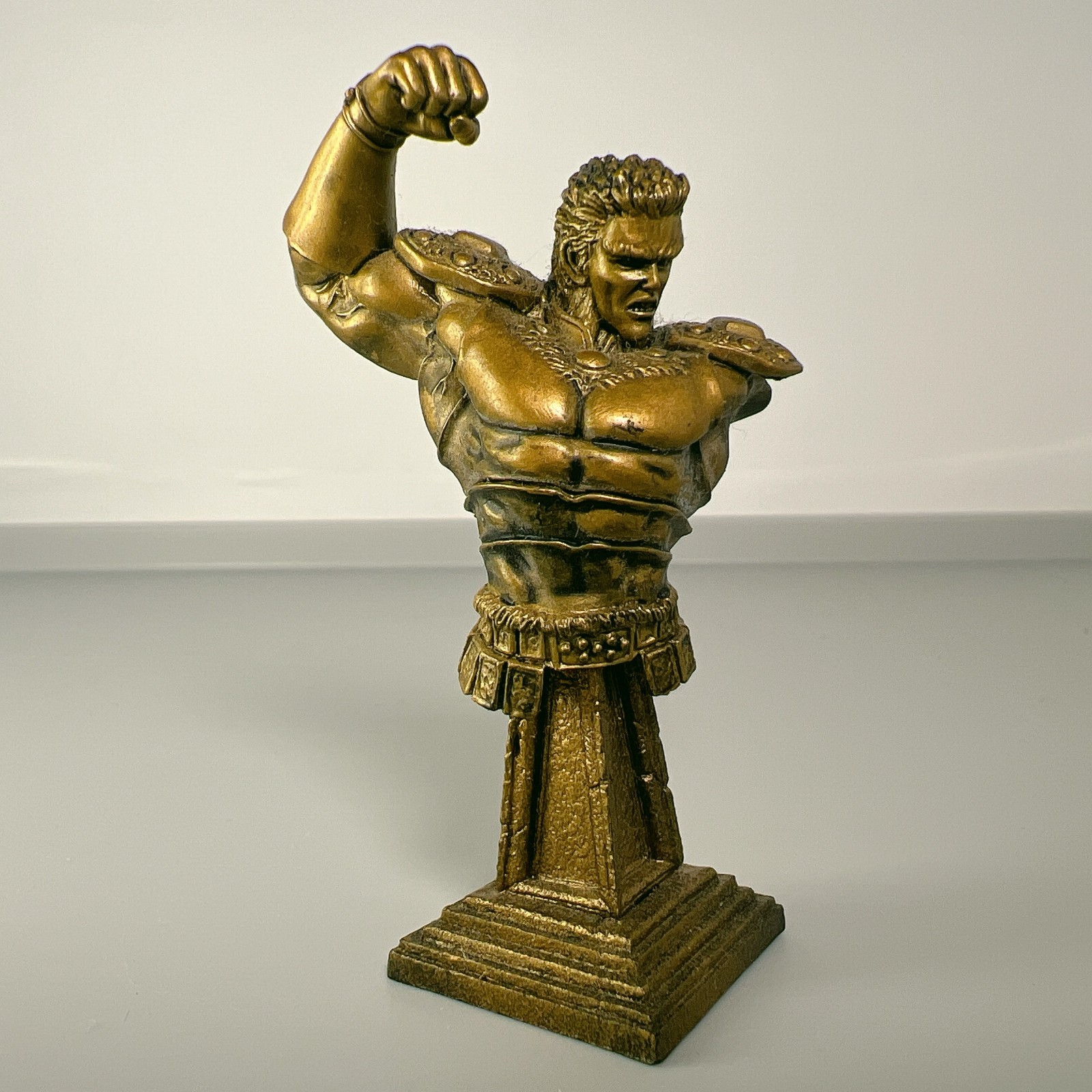
Raoh Gold Bust Figure by Kaiyodo, 7-Eleven Japan Limited

Hokuto no Ken and the Character Who Defined an Era
Hokuto no Ken — known internationally as Fist of the North Star — ran in Weekly Shonen Jump from 1983 to 1988, written by Buronson and drawn by Tetsuo Hara. Set in a post-nuclear wasteland, the story follows Kenshiro, master of the lethal martial art Hokuto Shinken, as he fights through a world ruled by warlords and brute force. The Toei Animation anime adaptation ran from 1984 to 1988 across 109 episodes. Beyond Japan, the series aired across Europe — particularly in France and Italy — and built a following that reaches into South America and beyond. Decades of sequels, films, OVAs, and video games have kept the franchise alive and continuously present in popular culture.
At the center of the series’ enduring appeal sits Raoh, also known by the title Ken-Oh, meaning Fist King. He is the eldest of the four Hokuto brothers and the most formidable opponent Kenshiro faces — not a simple villain, but a warrior defined by overwhelming power and an unyielding personal code. His silhouette is unmistakable: towering shoulder armor, a heavy chest plate, and one arm raised in absolute conviction. When Raoh delivers his final words at the moment of death — “I have lived my life without a single regret” — it lands as one of the most quoted lines in Japanese manga history. Among fans, Raoh consistently places at or near the top of popularity rankings, often trading positions with Kenshiro himself, and he remains a priority character in virtually every wave of franchise merchandise.
Kaiyodo, Gold Variants, and Japan’s Convenience Store Collectible Tradition
This piece was sculpted by Kaiyodo, a studio founded in Osaka in 1964 that holds an unusual place in Japanese figure-making. Kaiyodo is widely credited with developing the professional figure sculptor culture in Japan, and its output — from the Revoltech articulated figure line to the Choco Egg food-toy collaboration with Furuta Confectionery — has made the brand internationally recognized among collectors as a reliable signal of sculpting quality. The bust format itself, a pedestal-mounted depiction of the head and upper body, is a distinct category in Japanese character goods: denser in detail than a small trading figure, more displayable than a full-body statue of comparable scale.
The distribution method here is as notable as the maker. This bust was sold exclusively through 7-Eleven Japan stores, part of a well-established tradition of Japanese convenience chains partnering with rights holders and figure manufacturers to release campaign-only items unavailable through standard retail. These releases are produced for a defined campaign window, in limited quantities, and sold only within Japan with no official export. That domestic-only model is precisely why pieces like this surface on international platforms years after their original sale window closes.
The gold metallic finish reflects another consistent practice in the Japanese collectible market: a gold-color variant functions as a premium or campaign-specific edition, set apart from standard releases. Paired with Raoh’s identity as a self-proclaimed king of the post-apocalyptic age, the finish aligns with the character in a way that feels considered rather than decorative — a warlord rendered in the color of conquest.

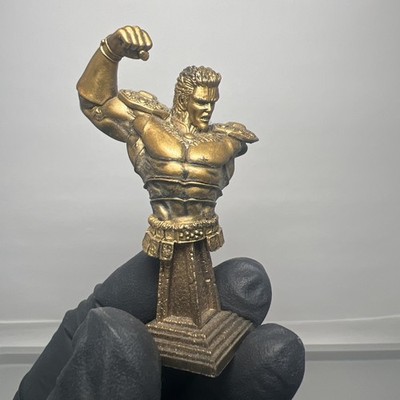


Boxed and cushioned for the trip from Japan
$14.07
Ships worldwide from Japan • Full photos and details on the listing