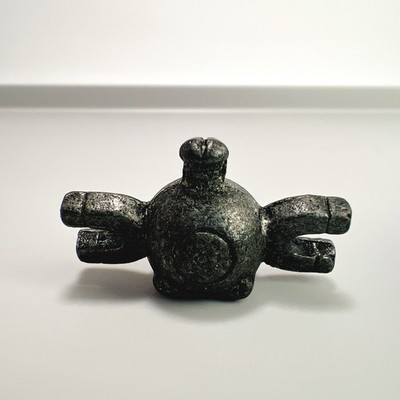
Magnemite Pokémon Metal Collection Figure

A Small Piece of the Original Pokémon Boom
The Pokémon Metal Collection is a series of small diecast figures attributed to Bandai, produced during Japan’s first great Pokémon craze. Cast from a zinc alloy and left largely unpainted, these compact figures render each character as a solid, weighty miniature — distinct from the enormous volume of plastic toys produced at the same time.
This particular figure depicts Magnemite, Pokédex No. 081, in the design the character has carried since 1996: a spherical body flanked by two horseshoe-magnet arms and topped with a short cylindrical screw. Bandai is the most likely manufacturer — the company held official Pokémon licenses and produced large quantities of merchandise through its Gashapon capsule-toy machines and food-toy formats, both of which were common distribution channels for this line. Whether this specific figure came out of a capsule machine or was packaged alongside a snack cannot be confirmed, but initial releases of the series are believed to date to around 1997–1998.
Magnemite and the Era It Comes From
Magnemite entered the franchise with the Game Boy titles Pocket Monsters Red and Green, released in Japan on February 27, 1996, as one of the original 151. The anime series launched on TV Tokyo on April 1, 1997, and the combination of game and cartoon ignited a social phenomenon that began reaching international audiences from 1998 onward. The Metal Collection series sits squarely within that domestic boom — part of the wave of Japanese merchandise produced at full pace for the home market before global distribution caught up.
One detail that places Magnemite in time: when it first appeared, the character was a pure Electric type. In the second generation of games — Gold and Silver, released in Japan in 1999 — it gained a secondary Steel typing, a change that coincided almost exactly with the years these figures were in production.
What Draws Collectors to This Kind of Figure
First-generation Pokémon carry a recognition that holds across age groups and regions. Among them, Magnemite occupies a particular niche: its design is mechanical and industrial in character, built around a magnet motif that sits apart from the more organic forms in the same lineup, and it has attracted a consistent following as a result.
The Metal Collection figures were made for the Japanese domestic market and did not reach international consumers through official channels at the time. Collectors who focus on early Japanese Pokémon merchandise treat pieces from this era as their own category, defined by material and production period as much as by character. Cast metal — heavier and more dimensional than plastic — separates them from the broader landscape of late-1990s Pokémon toys, and that tactile distinction is part of what makes them recognizable within the collector community today.


Boxed and cushioned for the trip from Japan
$18.85
Worldwide delivery from Japan • See the listing for condition and size