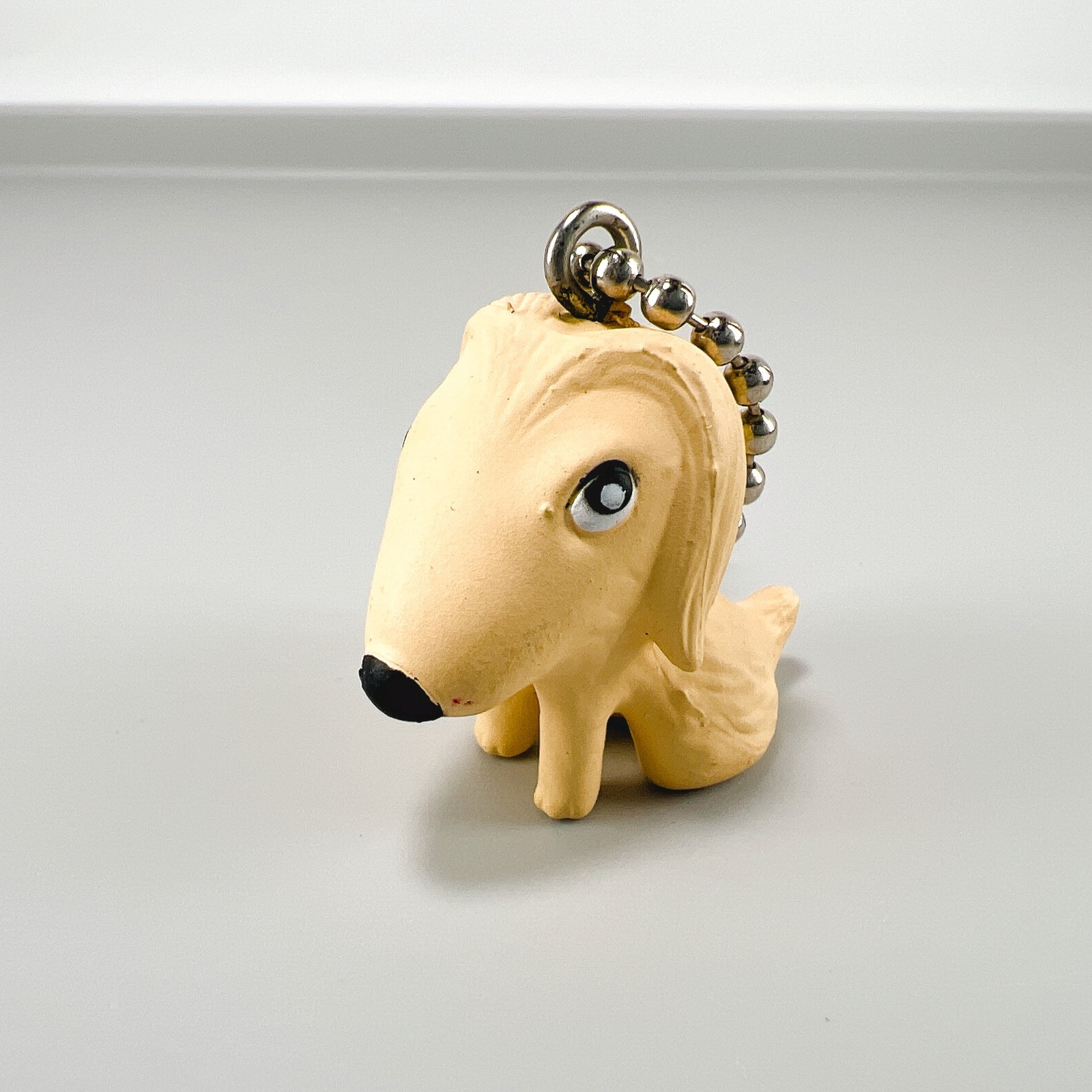
Afghan Hound Dog Keychain Figure

A Chibi Portrait of a Distinctive Breed
This small piece depicts an Afghan Hound rendered in the deformed, chibi-influenced style that defines a well-established category of Japanese miniature toy design. The body is molded in hard plastic or resin — finished in a beige or tan matte tone — with four short legs, a small curled tail, and large round eyes featuring dark pupils set against bright white. What ties the design unmistakably to its subject is the figure’s head: the long, silky hair that falls around the ears and face of a real Afghan Hound is exaggerated here in a way that is at once cartoonish and immediately recognizable. A ball chain and split ring attached at the crown make it functional as a keychain. In Japanese toy culture, this format sits within a category commonly called a mascot figure or figure keychain. The manufacturer’s name and series label are not marked on the piece, so its precise origin remains unconfirmed — it may belong to a standalone dog-breed figure series, or possibly to a Japanese character property that has not yet been identified.
The Gashapon Era and the Animal Figure Tradition
The format this figure represents — a compact deformed resin figure with a ball chain — was at its most widespread in Japan during the 2000s and into the early 2010s, with roots reaching back to the late 1990s. Pieces like this were typically distributed through capsule vending machines, UFO catcher arcade prize machines, or lottery-style prize draws. Bandai registered its “Gashapon” trademark in 1977, and the capsule toy machine became a fixture of Japanese retail over the following decades, eventually producing hundreds of new series every year. Dog and cat breed series were a reliable staple of this ecosystem: companies including Yujin (now defunct), Bandai, Takara Tomy Arts, and Epoch each released multiple lines featuring real breeds in miniature deformed form — though which company made this specific piece is not known. The visual approach — rounded proportions, oversized eyes, a soft neutral color palette — reflects the kawaii aesthetic that developed in Japan from the 1970s onward and has since become familiar worldwide.
The Afghan Hound as a Collectible Subject
The Afghan Hound originates from Central Asia and Afghanistan, bred originally as a coursing dog capable of working over difficult terrain. Its long, silky coat gives the breed an unusually aristocratic silhouette, and it has been a presence in international dog shows for well over a century. In Japanese merchandise, it occupies a relatively niche position compared to breeds such as the Shiba Inu, Corgi, or Poodle, which dominate the domestic animal goods market. Within capsule toy dog-breed series, however, a wide roster of breeds — including less prominent ones — was frequently included to serve collectors working toward a complete set. Outside Japan, the Afghan Hound has a dedicated following among breeders, show enthusiasts, and breed-specific admirers, particularly in Europe and North America. A kawaii-style Japanese miniature in the breed’s likeness is simply not the kind of item that surfaces through mainstream retail in those markets, making it a point of interest for Afghan Hound fans who also follow Japanese pop-culture goods.


Boxed and cushioned for the trip from Japan
$14.07
International shipping available • Ask us anything before you buy