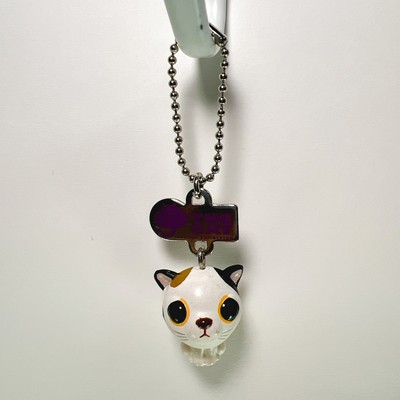
THE CAT Artist Collection Kawaii Cat Series #4 Keychain Figure

A Calico Cat Design with Centuries of Lucky Symbolism
The cat depicted on this figure is a calico — mikeneko in Japanese, literally “three-fur cat” — rendered in white with patches of black and warm orange. Its large round yellow eyes and exaggerated expression are immediately readable as kawaii: the deliberately endearing, cartoonish design philosophy that has shaped Japanese character goods since the 1980s. This is not a naturalistic sculpt; the proportions lean toward super-deformed, simplified into something that reads as charming rather than anatomically precise. The design carries no connection to any specific anime or manga franchise — it is an original character concept within an original product line.
In Japan, the calico pattern carries cultural weight that extends well beyond aesthetics. The three-color combination — black, white, and orange — has been associated with good luck for centuries, a tradition most visible in the maneki-neko, the beckoning cat seen in shops and homes across Japan and now recognized globally. Genuine three-color calico cats have historically been considered particularly auspicious, and that folklore has fed a steady demand for calico motifs in Japanese character design and collectibles.
Numbered Series and Japan’s Ball-Chain Mascot Tradition
THE CAT Artist Collection comes in a format well established in the Japanese toy market: a compact sculpted head attached to a silver ball chain, equally suited to a bag clip or a display shelf. The “Artist Collection” subtitle suggests some level of designer involvement in the line’s creation, though no specific collaborator is identified in available records. The “Kawaii Cat Series” runs as a numbered sequence — #1, #2, #3, #4 and presumably beyond — a structure built around the expectation of collecting multiple pieces rather than treating any one as a standalone. The total number of entries in the series has not been confirmed.
The ball-chain mascot keychain became one of the defining collectible formats in Japan from the late 1990s through the 2000s. Items in that format typically reached buyers through capsule toy machines, food-packaged toy lines, dedicated character goods shops, and crane game prizes — though which of those channels this particular series used is not documented. What is consistent across all those outlets is the format itself: small, portable, numbered, and designed to accumulate.
What Draws Cat Collectors Outside Japan to Pieces Like This
Several factors give this type of item broader appeal. The “Made in Japan” origin is a provenance marker that matters to collectors focused on country of manufacture and era, particularly for toys from the late 1990s and 2000s. The calico cat is a recognized motif internationally — the three-color pattern is called “calico” in English, and its association with Japanese lucky-cat imagery is familiar well beyond Japan’s borders.
The kawaii design label signals more than a style; it identifies a specific design tradition with an established international following across East and Southeast Asia, Europe, and the Americas. Items that express that tradition without being tied to a single franchise can appeal across different fan communities rather than only within one. And the series numbering works as it always does: it makes acquiring one piece feel like the opening move in completing a set.


Boxed and cushioned for the trip from Japan
$18.85
International shipping available • Ask us anything before you buy
