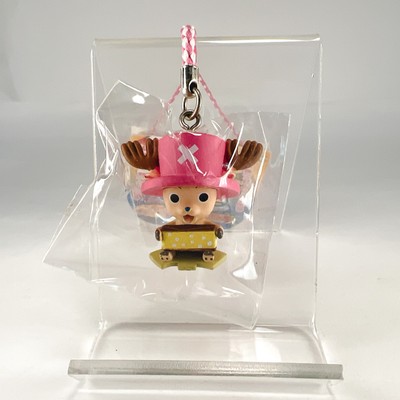
One Piece Chopper Castella Strap, Nagasaki Limited, circa 2011

A Compact Figure, a Beloved Character
This is a character strap — a small accessory combining a braided cord, metal clip, and a molded plastic figure rendered in the deformé style. “Deformé” is a term widely used in Japanese collectible culture to describe an SD, or super-deformed, approach: the head is enlarged, the limbs shortened, and the proportions pushed toward something compact and rounded. The character depicted is Tony Tony Chopper, the ship’s doctor of the Straw Hat Pirates in Eiichiro Oda’s One Piece.
Chopper is a reindeer who ate the Human-Human Fruit, granting him the ability to walk and speak. He debuted in volume 15 of the manga, around 2000, during the Drum Kingdom arc. His design — a pink hat with a white X mark, stubby brown antlers, and a naturally rounded silhouette — lends itself to SD treatment better than almost any other character in the series, which helps explain why he became one of One Piece’s most broadly merchandised figures. In this strap, he is shown holding what appears to be a piece of Nagasaki castella: a yellow rectangular cake with white spots, clearly evoking the distinctive traditional packaging.
Nagasaki, Castella, and Japan’s Regional Souvenir Tradition
Castella is a dense, lightly sweet sponge cake brought to Japan by Portuguese traders through Nagasaki in the sixteenth century. It remains the city’s most recognized culinary specialty, sold by long-established shops including Bunmeido, Fukusaya, and Shooken. Pairing that local identity with a popular anime character was a natural fit within Japan’s well-developed tradition of regional souvenir goods.
The “Nagasaki Limited” designation means precisely what it says: this strap was sold through tourist shops and souvenir outlets in Nagasaki, not through standard retail distribution or export channels. Through the 2000s and into the early 2010s, One Piece merchandise was developed extensively around specific Japanese regions, with each area’s food culture or landmarks serving as the design theme. Nagasaki — with its castella, champon noodles, and the historic Dejima trading port — fit that pattern well.
The 2011 date places the item in a specific moment in Japanese consumer culture. Character straps of this format — braided cord, clip, and individually packaged molded figure — had surged alongside Japan’s feature phone era in the early 2000s. By 2011, the shift to smartphones was well underway, and mass production of this particular accessory style was approaching its end.
One Piece’s Scale and Chopper’s Place Within It
One Piece has been serialized in Weekly Shonen Jump since 1997 and continues through 2026, with more than 500 million volumes in circulation worldwide. The series holds a Guinness World Record for the most copies published for a single-author comic series. The Toei Animation anime adaptation has been broadcast since 1999 and remains ongoing.
Within that franchise, Chopper holds a particular kind of cultural visibility — recognized well beyond the core readership, appearing in theme parks, licensed goods, and broader pop-culture contexts internationally. A strap connecting him to Nagasaki’s castella tradition sits at an intersection that appeals to collectors interested in regionally specific Japanese merchandise: a long-running anime IP, a centuries-old local food tradition, and an accessory format tied to a particular decade of Japanese consumer culture.
The manufacturer of this item is not confirmed from available information. One Piece licensing is managed by Toei Animation and Shueisha; known producers of similar deformé straps from this period include Banpresto (now a Bandai Namco subsidiary), SEGA Toys, and Arts, though the specific maker here cannot be determined.


Shipped directly from Japan by a small shop
$14.07
Ships worldwide from Japan • Full photos and details on the listing