Godzilland No.81 — A Numbered TOHO Kaiju Sticker From 1984

What Godzilland Was and Why 1984 Mattered
The year 1984 was a turning point for Godzilla. After nearly nine years without a theatrical release, TOHO brought the franchise back with a new film that closed out the Showa era and marked the opening of what became known as the Heisei period. The return was a significant cultural event in Japan, and it arrived with a wave of merchandise aimed at introducing the franchise to a new generation of fans.
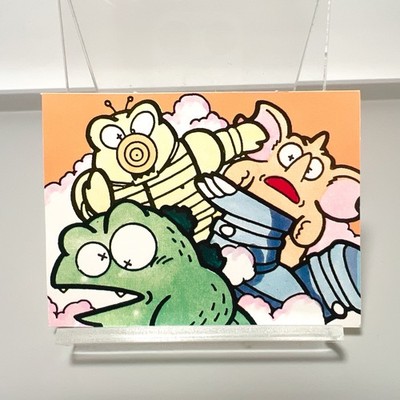
Godzilland was one strand of that rollout. Rather than presenting the franchise’s monsters in their familiar, imposing form, it reimagined them as chibi — small, round, exaggerated figures in the SD (super deformed) style that was common in Japanese pop merchandise of the era. This made the kaiju approachable and appealing to younger children while tapping into a broader pop-art sensibility that ran through 1980s Japanese consumer goods. TOHO held the rights to the Godzilla IP and licensed the characters for merchandise; which company actually manufactured this particular sticker series is not definitively established, though TOHO-licensed sticker products of the period were produced by several companies including Amada, Epoch, and Bandai.
Three Chibi Kaiju on a Single Sheet
This sticker, numbered No.81, appears to feature three characters from the Godzilland line. A green figure with X-marked pupils is a deformed Godzilla — those X eyes being a characteristic comedic detail of the Godzilland visual style. A yellow, robotic-looking character with antennae and a concentric-circle face is strongly consistent with a chibi version of MechaGodzilla, the mechanical kaiju that first appeared in the 1974 film Godzilla vs. MechaGodzilla and has remained one of the most recognizable monsters in the franchise worldwide. A third character — light brown, with multiple ear-like features and a surprised expression — is harder to pin down from image alone; candidates include Anguirus or King Caesar, both Showa-era monsters, though a definitive identification would require closer examination of the physical item.
The pairing of Godzilla with what appears to be MechaGodzilla reflects the lineup of characters that had featured prominently across the franchise’s Showa run and were well known to Japanese children by the early 1980s.
Japan’s Numbered Sticker Culture and the 1980s Collector Format
Character stickers were a staple of Japanese childhood throughout the 1970s and into the 1990s, sold at candy stores, stationery shops, and toy retailers across the country. The numbered, complete-set format — evident here from the No.81 designation, which implies a series of considerable size — was a standard design strategy that encouraged children to track down every entry in a line. Bikkuri Man stickers, which launched in 1985, became the most famous expression of this format, but numbered character sticker sets were already well established before then.
This particular sticker is currently stored in a clear protective sleeve, indicating it has been kept as a collector’s item rather than used in the way stickers typically were at the time. At an estimated age of over forty years, paper-based products from this period that have survived in presentable condition represent a small share of what was originally printed and sold. Godzilland’s SD character style also places it in the broader lineage of Japanese chibi design — a visual language that influenced decades of subsequent character merchandise and remains immediately familiar to fans of the era.


Shipped directly from Japan by a small shop
$8.82
Ships worldwide from Japan • Full photos and details on the listing